Wednesday, July 02, 2014

Back in the game with GABA Oolong

I'm really cleaning out the tea closet.  A true sign of a hoarder is a painful inability to part with any piece of their treasured hoard.  My first serious subtraction is a box of shu little over 5 pounds that I dropped off at the post office today.  I have 10 more pounds ready to handover to a friend visiting from Hawaii this weekend.

What's the first thing one should do after clearing out tea?  Buy more tea of course...  I limited myself to a small box of oolong as it's the only kind of tea my body tolerates these days.  I ordered from mountaintea.com mainly because they ship from L.A.  A box full of tea waiting on my front porch warms my heart like no other delivery.

I ordered a spectrum of oolong to refind my preferences.  I used to drink high mountain oolongs fifteen years ago when I didn't know too much about tea and thought they were quite the bee's knees.  Who knows what I was actually drinking back then- probably some mediocre oolong marked up as Alishan. I probably would not have known any better back then either.

You can see this vendor thoughtfully color coded their pouches to match oxidation levels with yellow being their light roasted oolong. The tea in the purple pouch is in a unique category of its own- it's an oolong oxidized in the presence of nitrogen to increase naturally occuring GABA levels.  The Japanese came up with this discovery twenty years ago while experimenting with alternative preservation methods.   Most humans probably could do with more GABA- a neurotransmitter which increases mental alertness as well as tones muscles. The reputed health claims of GABA are so wide and varied that if true- GABA would be a wonder drug.

I don't have an entrance exam to take but I'm always keen to enhance my flagging mental functions.  I was playing hooky today to go to the post office so the most mentally taxing thing I had to do was organize panda and polar bear photos on pinterest.  I'm not sure I was the beneficiary of increased mental function but if GABA tea had such noticeable effects, should we not see it in almost every store that sells tea?  But then America is not so much a hyper-competetive society and not all Americans actually want to be smarter or more focussed.  In fact many citizens in Northern California prefer the opposite it seems.


The tea was a pleasant affair - one notch above ho-hum and I'm not motivated to draw it out. I would probably not buy or drink this tea without the reputed health benenfits.  In the summer, I love sipping my tea in front of my squash and tomato patch contemplating novel ways of enjoying the summer veggies.  After seeing me struggle with my ipad camera and wobbling tea plate,  my husband sweetly volunteered to be the hand model in this shot. 

Friday, June 13, 2014

Shield Your Eyes

Now for something completely different...

I had the most unexpected pleasure of touring the synchrotron at Lawrence Labs arranged through a friend.  In layman's parlance,  the synchrotron is a light factory which beams x-ray strength light at different ranges to be employed in scientific experiments ranging from recreating conditions in the earth's core to uncovering protein structures such as the ebola virus.  Our friend's neighbor Tom has been running the facility for 13+ years and proved a most excellent guide. I'm not used to hard-core science so my poor brain probably absorbed only a fraction of what Tom transmitted so any apologies in advance for incompleteness and errors.


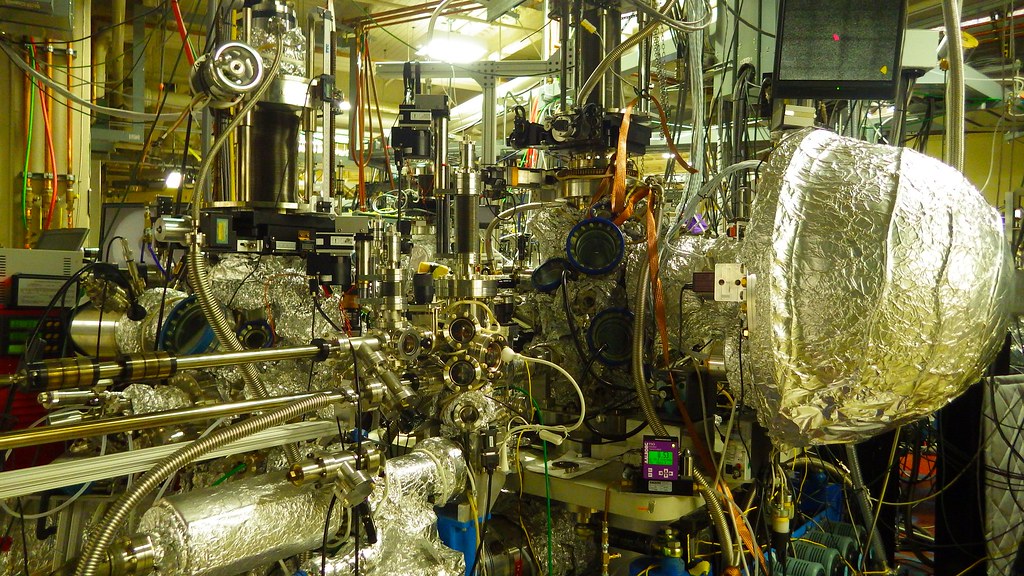
Tom first took us around the end of beamlines- beamlines are vacuum sealed pipes delivering radiation to an experimental endstation as shown above.  If you've ever built your own spectrometer with a cereal box, duct tape and CD, you can see the above setup is altogether a different beast replete with it's own cryostat.  All that wrapped foil is not a scientist's idea of a prank.  The foil actually keeps the heat in for burning out the impurities inside the system in order to create a serious vacuum.

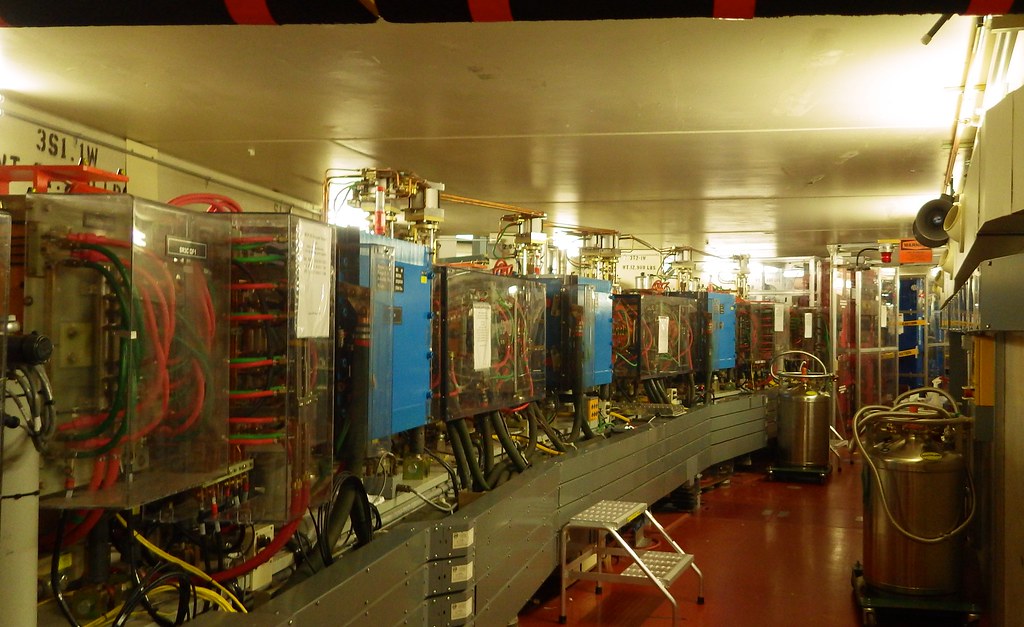
The x-rays are generated as a by-product of electrons racing around a giant ring with bending magnets forcing them to a circular path.   Because the synchrotron was shutdown for maintenance, we were allowed to go inside the normally off-limits storage ring.  I was too agog to take a picture of a wiggler- not the Super Mario critter but magnet arrays that "wiggle" the particle beam.  As a software engineer, I felt a tad jealous that anyone could just walk around and appreciate the complexity and engineering so visually.  I've seen more wires, tubes and shielded boxes today than I have in the sum of my entire life.  I've only visited one another particle accelerator CEBAF when my husband worked there as a young lad long ago but now I'm quite curious to visit a collider.  Yeah science! (I'm only a mild Breaking Bad fan but Mr. White definitely would have drooled over all the crystallography projects going on here. Unfortunately the character died in a shoot out but if he had quit his meth empire while he was ahead, he could have submitted a research proposal for some beam time. )

Saturday, May 31, 2014

Collecting China - Spode Greek

When you drink tea seriously, you naturally end up collecting tea wares trolling ebay in your leisure time. Even the history of tea adoption in 17th century England is accompanied by insatiable demand for hand-painted Chinese porcelain tea wares which conveniently served as ballast for the tea laden cargo ships. Fortuitously the overwrought unmet demand for Chinese porcelain gave birth to the great pottery industry in Staffordshire, England which proudly dominated world ceramics production for centuries only to crash in competition with cheap Chinese wares in our time of changing tastes. Ironically, British potteries sent manufacturing back to China in the last decade to cut costs with inferior results which only accelerated their irreversible decline.

Even before I drank tea seriously, I had a fondness for English transferware as each plate tells many stories and I love stories. Transferware involves a process by which copper engravings could be inked on to paper rubbed onto ceramics allowing complex patterns to be readily and faithfully reproduced on china at a moderate cost.  I'm a fan of Spode reproductions of their archival engravings because of their dishwasher safe durability and the historical quirks of the designs.

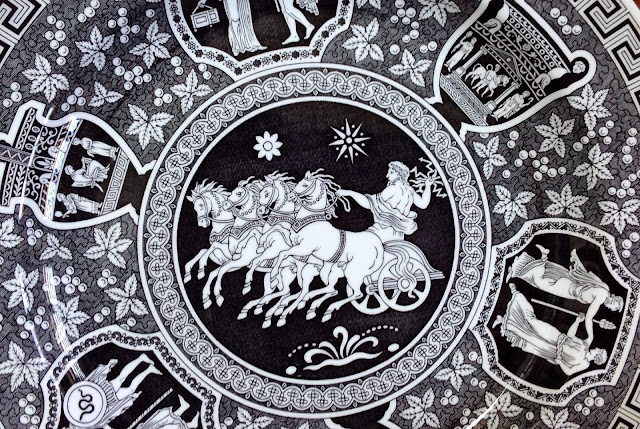
My everyday set is the Spode Greek reproduction which was first introduced in 1806.   I love the cartoony renditions in Spode's Greek pattern which is by far one of their most elaborate designs with encircling vases replete with their own individual scenes. I was once pushing peas around my plate only to notice that the horses pulling Zeus's chariot were clearly ungelded stallions.  I can't imagine an unsuspecting diner two hundred years ago wanting those extra bits and bobs on their dinner plate.

Despite this minor allowance, Spode designers appear to have tamped down Greek sensuality and naturalism when it came to the human form to better match Georgian sensibilities.  The Spode Greek patterns are based on three different renditions of engravings off Sir Alexander Hamilton's vases.  (I am impatiently waiting for my 15 pound Taschen reproduction of these engravings to arrive in the mail and have prepared an Amano chocolate bar for my postman.)


I found the original Greek urn for the above platter in the British Museum.  If an ancient Greek saw the above neo-classical version, they might be quite confused as to why the most important detail had been omitted- it would be like drawing a face without a nose.  Also the languid look of eroticism between the center nymph and a seated Herakles is translated above into something much more chaste that is not even likely to lead to hand holding.  Unlike this politely seated man-boy,  the real Herakles was a noted virile stud responsible for uncountable dalliances with both sexes. In fact, his young lover Iolaus is looking on right of Herakles. I'm not sure I want a look of burning desire across my meat platter but it's fascinating to see how cultural prejudices and commercial pressures have transformed the original.  Also the Spode pattern heavily anglicizes the faces with the prominent Greek noses reduced to an insignificant squiggle.
© Trustees of the British Museum

Even with apparent effort at restraining the erotic exhuberance of the Greek source material,  men remain bare buttocked and even though the female sex is modestly covered- the Spode engravers still have slipped a nipple or two under their togas. I'm not sure if the upright Georgians or tight-lipped Victorians ever discussed the salaciousness of these designs but it surely would have made for a more lively dinner party.

I have 4 different sets of Spode out of 9 china sets which mark varying stages in my life.  When I first moved to earthquake prone California, I was very hesitant to amass a cabinet full of breakable things. But I quickly overcame this quandary - if my china smashes to bits in the next "Big One",  I was simply going to build a giant mosaic fence to commemorate my love for china and the inevitability of breakage.  Even if my china were to succumb,  it was completely worth the daily joy I received all these years eating off such illustrations instead of enduring the bland white replaceable bistro tableware that seems to be so prevalent in private homes now.

Friday, May 30, 2014

Gross Shu Giveaway

( note: A lovely lady has claimed these bricks.)

What am I even doing with such budget shu?   I originally had a value shu experiment in mind but since I drink so little puerh these days, I'm trying to downsize a little at a time.
 
If for whatever reason you like cheap shu(I don't judge),  it's all yours.  Actually the 2007 Tianpin is not bad. The 2008 63 6FTM brick  is not opened and probably isn't gross. Both are even sold out at tuochatea.com.   I've had some shockingly atrocious spit-out shu from one vendor that probably cost 10 times as much. The 2005 CNNP brick tastes decently woody but gives me the same heartburn that sheng does these days. If I'm going to get heartburn, I'm going to drink sheng.


Why don't I gift these to a friend? It's like giving a Hershey chocolate bar to a friend. I can't do that. 


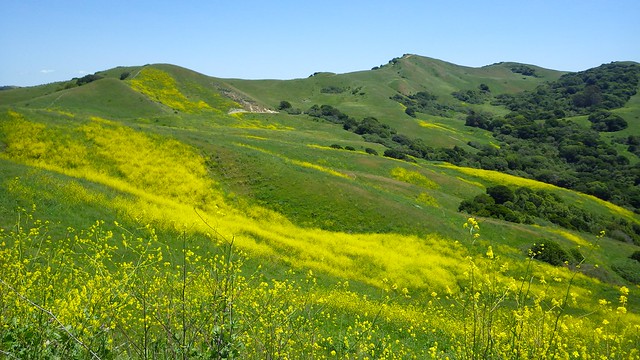
It's been such tough going for the last year and a half. Without tea to drown my sorrows, I have only but the raw landscape to provide some solace. Only last month the green tufts of grass made me forget about the California drought but it's quickly dried to a golden brown.


Saturday, March 22, 2014

Sikong Tu's Twenty Four Styles of Poetry

Recently I chanced upon a slim volume of Chinese masters containing many surprising gems. I'm not much for Tang dynasty poets mostly due to wooden translations but Sikong Tu's instructional set of 24 poems on ars poetica has given me riches to contemplate.  His work can apply to so much of the arts  as well as those of our particular concern- tea, teapots, and even blog writing styles.

I present to you a few of his verses with my inadequate commentary but recommend readers to seek out the full translation in The Art of Writing- Teachings of the Chinese Masters.

1. Masculine and Vital Style -
         "As great calf muscle bulges in use, the spiritual body swells inside;"

Those mighty Menghai shengs with agressive qi readily come to mind along with Bulangs with a pugilistic bent. Such tea sessions for me are a confrontation where I always lose. I leave this style for the hardier drinkers among us.
(Incidentally Assyrian panels tend to depict over-developed calves to reinforce the power of their rulers. Those calves bulge even when not in use so you can only fear their terror when they do spring into action.)

2. Placid Style -
"Dwell plainly in calm silence,
a delicate heart sensitive to small things."
 Teas of a peaceful disposition are dismissed for those wanting more of a "Masculine" or "Vigorous Style",  but all styles have a time and a place.  Such teas like Nannuo cakes are like a slow moving film about the Mongolian plains where very little happens.

9. Decorative and Pretty Style

Sometimes a light hearted pretty tea is just the thing to cheer up a day and oolongs easily fit that bill. Jakub had sent a most lovely Jinuoshan Youle  that was the most oolong style puerh I've come across. I enjoyed this pretty cup redolent of peach blossoms so I was taken aback this Jinuoshan was much reviled by Hobbes as an aberration.

11. Implicit Style
"Without a single word
the essence is conveyed.
Without speaking of misery
a passionate sadness comes through.

It's true someone hidden controls the world;
with that being you sink or float."
This was the first page I opened by chance and those words were such a salve that day.  Across the vast expanse of time and space, how could this poet express my inner state so keenly. Implicit arts rely much on the receiver to fathom it's hidden meanings. Perhaps in a brighter state of mind, I would have passed by these verses lightly.  Many quieter puerh teas I find to be in the implicit style as I have to be receptive or I easily miss their meaning or interpret them as bitter.

14. Careful and Meticulous Style
" This craft leaves tangible marks,
but they are almost invisible." 
I drank with Ira Mr. Gao's Yibang from Tea Urchin and you could tell the hand was involved creating something unique but you couldn't tell how.

15. Carefree and Wild Style
I've drunk a few wild and wooly Dehongs of this category. They don't have pretensions to be some other elevated tea. Some don't bother to hide or tame their wildness and so can give the drinker a bit of an adventure.

23 Big-hearted Expansive Style
"We live no more than a hundred years,
not too long before we depart.
Hapiness is bitterly short;
gloom and fretting abound. 
Why not take a jar of wine
and each day visit the misty wisteria"
Of course we would substitue a pot of tea for that jar of wine. A feel-good crowd pleasing style which frees us from niggling over petty details of poor overpriced tea. It's not about even having a particularly choice jar of wine or tea but appreciating that we are alive now.  With that I'll take a pot of placid tea out to my back garden.