Saturday, May 11, 2013

Amano Morobe

Today a long awaited box arrived and a few nibbles made me immediately order 10 more of a single variety from  Amano- a masterful bean-to-bar maker in Utah.  Drats, I guess I already gave away the plot ending.

Chocolate is very different from puerh where you don't wait around brew after brew for a delayed reaction in your body while you agonize over it's aging potential.    With chocolate, you know instantly when your pleasure centers hit pay dirt as a piece melts on your tongue.    

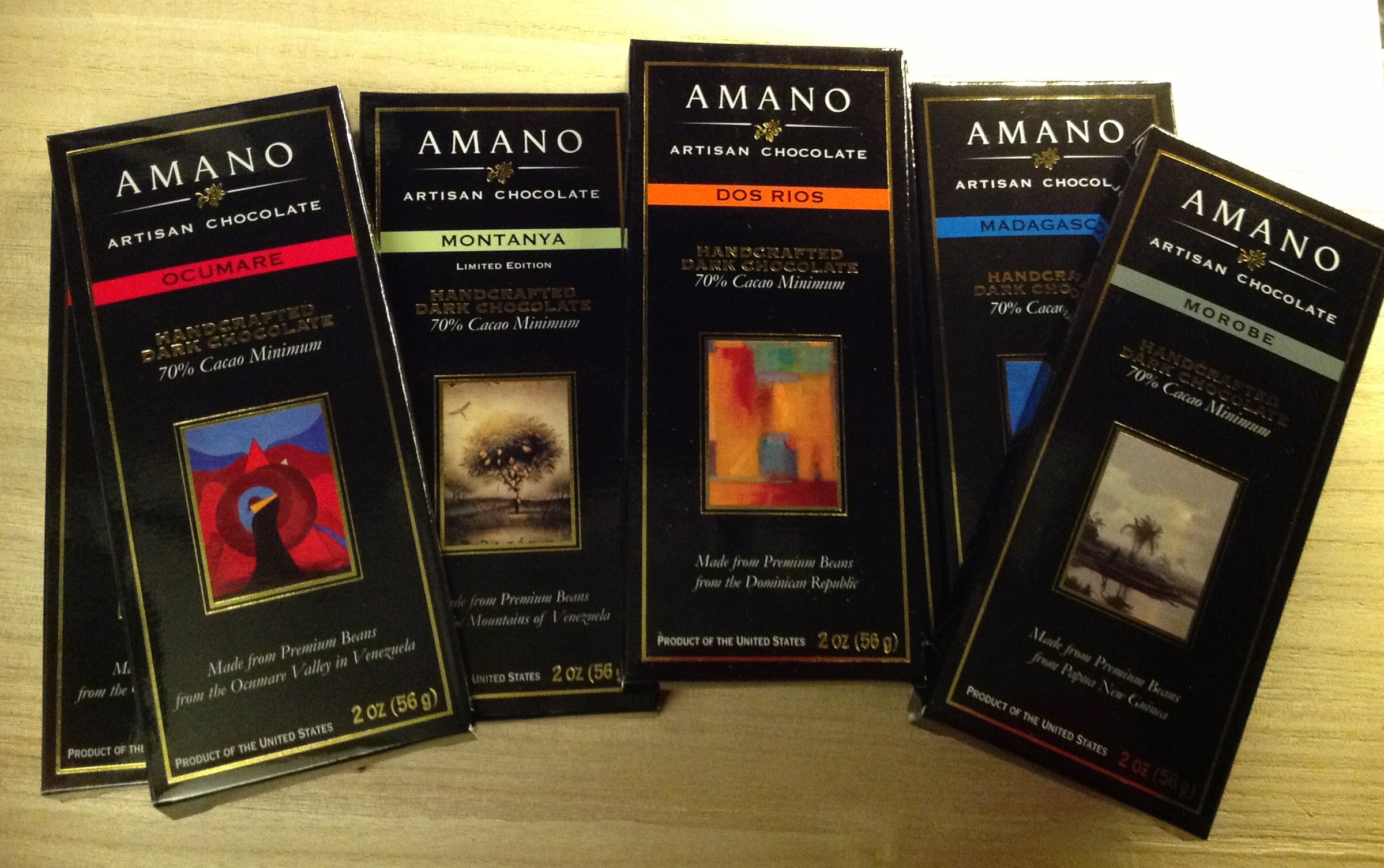
As in the world of puerh- the market is saturated with a lot of mediocre overhyped "artisan" bars.  However due to market forces, disgusting artisan bars are nigh impossible to come by unlike shu roulette which lands you heart burn if not straight out digestive turmoil.  In the world of artisan chocolate, most of it's good and some of it is pretty good but for your $7+, you want something wonderful and for $10+, something amazing.  Last month's unexpected let down with the overpriced Corallo bars forced me to right the wrong by ordering a variety box of Amano chocolates. 

It's not Corallo's meticulous processing I find fault with, it's just his limited forastero beans. I would love to see what Claudio Corallo could do with the same set of beans Amano uses.  It's when you compare all the different Porcelanas or Chuaos that you can get a better sense of each chocolate makers skill.  Judging from Corallo's interviews- he seems to display such a defensive outsider mentality that he may never source beans outside of Sao Tome to truly create the world's best chocolate.   (Note to Signor Corallo- you should not deem your chocolates superior because they're way better than Lindt and other industrial manufacturers with your $12.50 sub 2oz chocolate bars. You are competing with likes of other chocolate geniuses like Art Pollard of Amano. )  

The Amano Morobe bar is made from beans hailing form Southern Papua New Guinea. Pure PNG bars are few and far between as Papua New Guinea has suffered declining production with the cocoa pod borer and other diseases.  Their cacao industry is still very immature and it's mostly small farms in PNG that are not as experienced in fermentation as cacao estates in Venezuela or Ecuador.  I've been sorely let down by an unremarkable Mast Brothers PNG bar but all that is moot now that I've found Amano's PNG bar.  (I vowed never to be enticed or fooled by the handsome MAST Brothers wrappers ever again. )

The fruity dusky intensity of the Morobe bar is so utterly unique and remarkable, I instantly ordered 10 more.  There is the inherent nature of the bean and the chocolate maker's skill in bringing out those flavors in the end product.  Art Pollard- founder of Amano- states they experiment exhaustively to bring out the best of the bean's flavors and in comparing most of the bars that pass my lips- that man is one of the rare talents.

For more than half the artisan bars I consume, the experience is lessened by common flaws in the processing- over roasting or over conching so the character ends up being quite bland. But when I have the Amano bars- I'm instantly impressed by their unique delicate yet intense flavor profiles so much so that I keenly feel the inferiority of other bars. The quality and pleasure to be gained from Amano bars are so unmistakable that it makes it clear to me that when I'm just ambivalent about other single origin bars (Pralus, Cluizel, Dandelion, Mast Brothers, some Domori), I need not doubt deficiencies in my palate.   The only Amano bar I felt they didn't do the beans justice was their Chuao but I may suspect bean quality as it's fierce international competition to get the best Chuao beans. 

The Morobe has been one of the most exciting bars in my decades of chocolate consumption and after all this exhaustive gushing over Amano, I really should be going to bed now.  

End note-  One of my favorite documentaries of all time is Ongka's Big Moka about the gift culture of PNG.  I got 10 bars for distribution as I have a long long list of neglected friends.

Thursday, May 09, 2013

Joys of Head Cheese

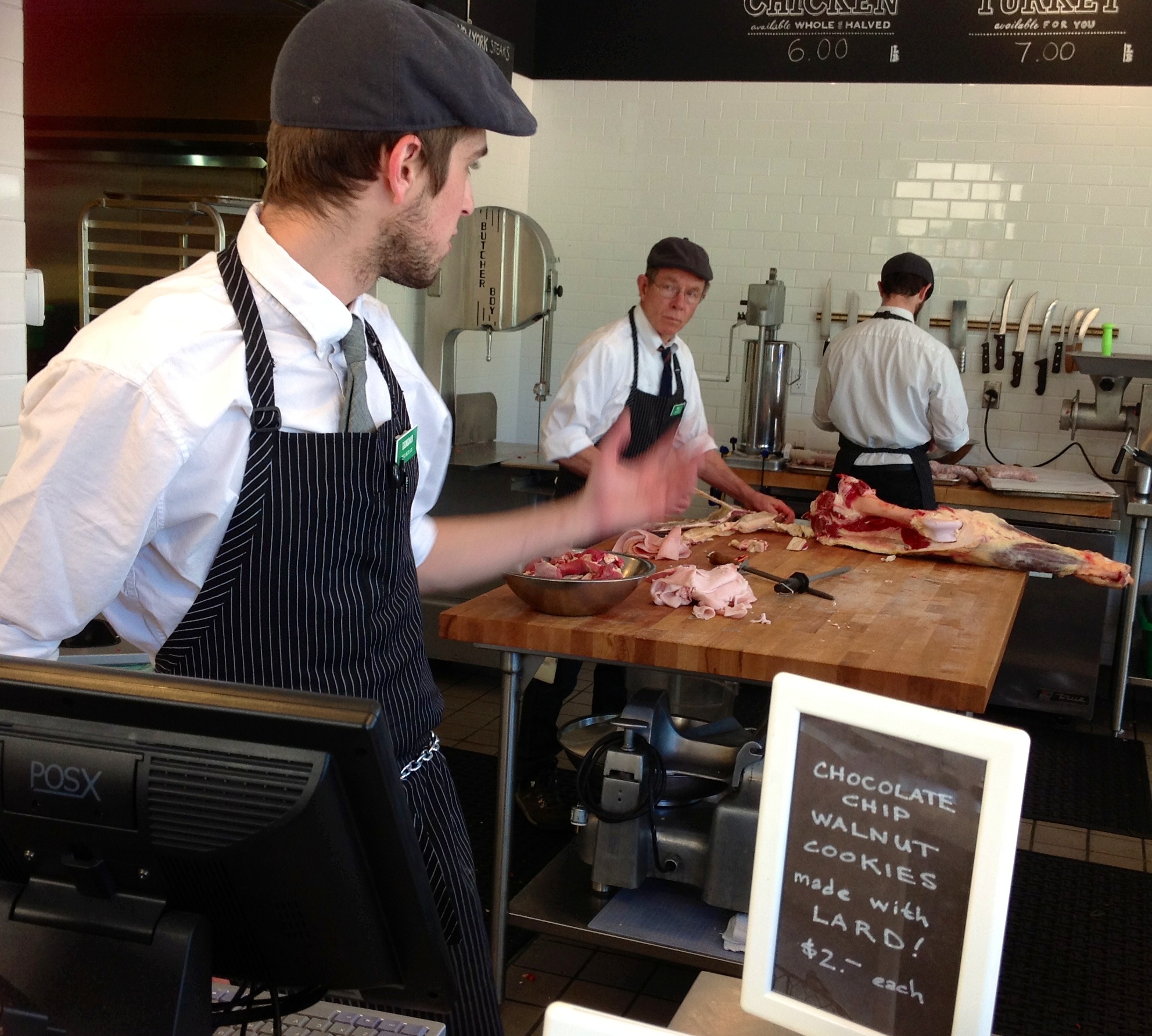
A finicky carnivore like myself needs a trustworthy supplier.  For this I turn to Berkeley's Local Butcher Shop.
Fine purveyors of most excellent meat, they also offer a bevy of house cured meats.  They make a
traditional head cheese as well as a spicy Italian version-  coppa di testa- and also  a grits based West Cost scrapple.  Their head cheese is extremely well executed and goes particularly well with drops of balsamic.  Head cheese is chopped boiled head meat in aspic without ears, eyes or brain. Sometimes they add heart and feet parts. I'm always tickled when I can recognize pieces of snout. I love foods that convert normally wasted or difficult parts into something wonderful.


The wiki entry on head cheese let's me know there are dozens of versions I have yet to enjoy especially of the sheep variety. But a quick photo reveal on the Icelandic Svið shows I am too wimpy for such a cured head on a plate.

The most delicious head cheese I've tried goes to Otto's  in Las Vegas which I would dub "masterly".  I enjoyed it with dabs of sour cherry preserve marveling how they managed to slice it so thinly.


My husband was recently watching the PBS series on the Oklahoma Dust Bowl. He tells me the first half hour is all about farmers who hang themselves in their barns as there was nothing to feed the family.  Even more heartbreaking is the story of the thirteen year-old that killed himself realizing he was a burden unto his family. We in the West for the most part are awash in an over-abundance of food. I think fasting periodically, one can gain better empathy for empty bellies around the world .  I started skipping two meals a week or health reasons not for weight loss and I am ever grateful I was born a South Korean and not a Northerner.

Tuesday, May 07, 2013

Double Deliciousness

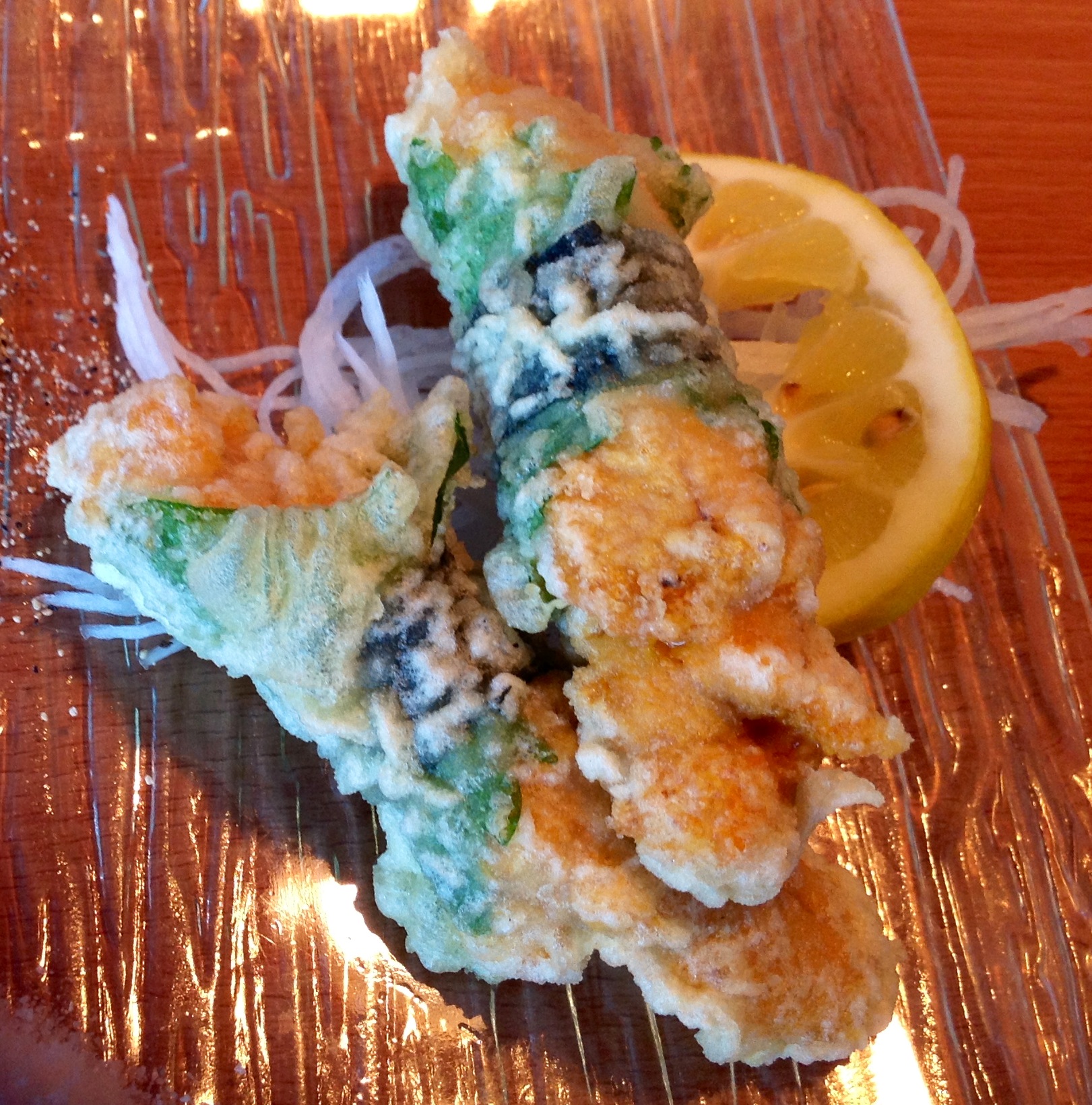
Purpose of my short life on earth is to share something delicious every day. Today I was lucky to have two absolutely delicious meals.  Tempura uni - what a brilliant idea! The uni is very fresh and not just a clever way to get rid of oozing old uni. I didn't have to share this deep fried treasure as my dear husband leaves all uni to me.


This excellent sushi dinner was at Kiku- my neighborhood sushi joint. My favorite is hotate or scallop. If there is any better, I don't want to know. So sweet and moist, there's no point in cooked scallops for me, not even deep fry in duck fat.

For lunch I had my usual blood 'n pork soup. I've been eating this soup at the same Vietnamese noodle shop in Oakland Chinatown for 10 years. But today I got it without noodles, just bean sprouts.  I've been trying all year and finally, it's not psychologically hard to forgo rice and noodles. Even five years ago- the idea of giving up rice would have been crazy talk. But now I can enjoy deliciousness undiluted with starches.


Sunday, May 05, 2013

Experiments in Fermentation

After tiring of the poor aging of my beengs, I experiment with a more gratifying form of fermentation. Yes it's sauerkraut Sunday and two Sundays in a row I've been busily chopping up red cabbage and red onion.  For the initial ferment to get started, Lactobacillus needs an anaerobic environment.   Koreans used to bury their urns in the ground to keep the air out. I just have these Fido jars with an air tight seal. 

Does sheng really need air to age?


Last week's batch is chock full of bio activity and ready to eat although it's still on the slightly crunchy side. Sauerkraut is a living food and it's taste will transform daily.  


Friday, May 03, 2013

Bi Luo Chun

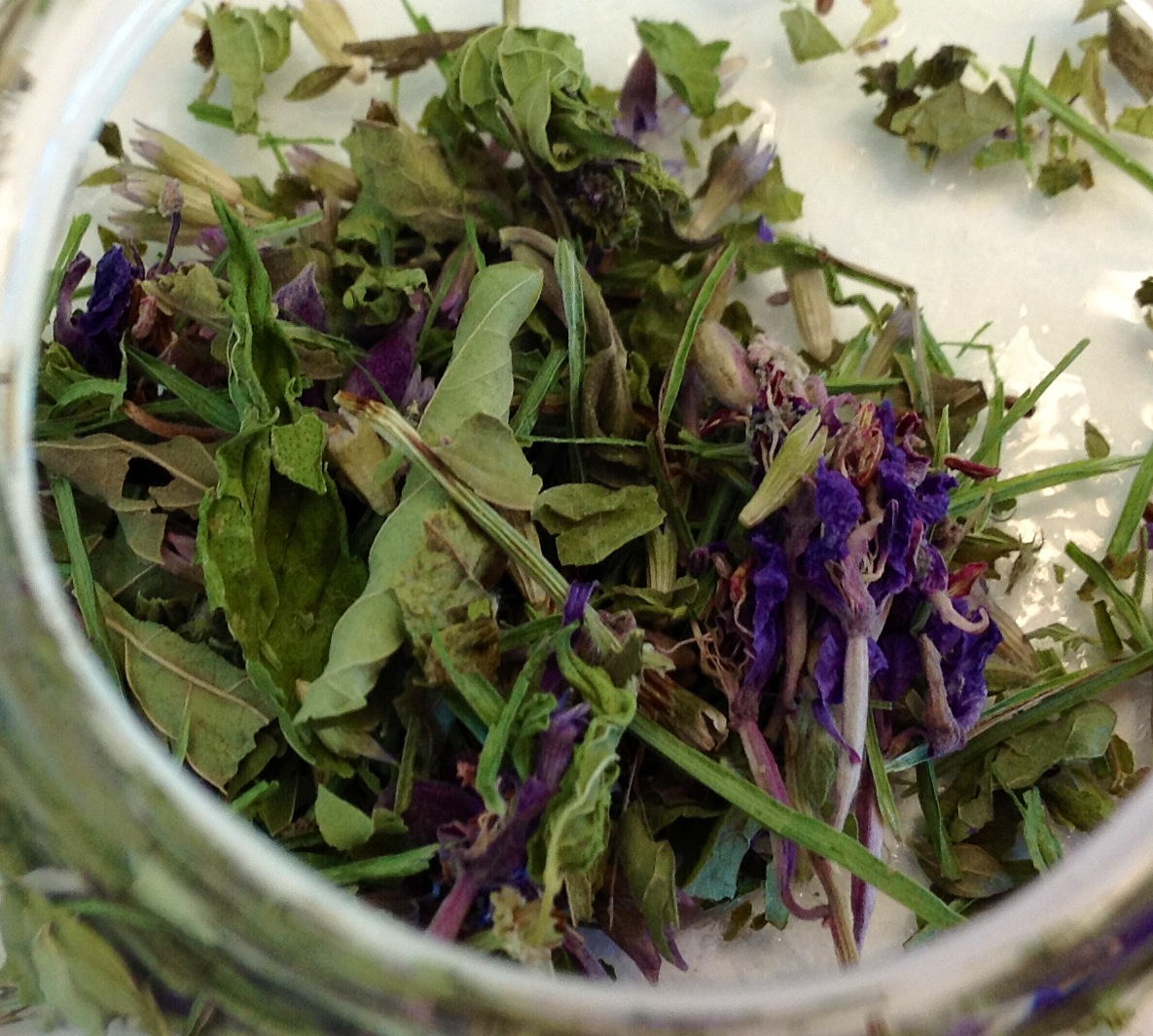
This Monday I received an unexpected care package of herbal teas from Israel. Among packets of Ban Lan Gen and Anise Hyssop, he had included Stephane Erler's Bi Luo Chun for the end of my camelia sinensis hiatus.

I've been feeling like a cave-dwelling critter living on an old pile of bones but Israel's anise hyssop made me feel light-hearted and gay.

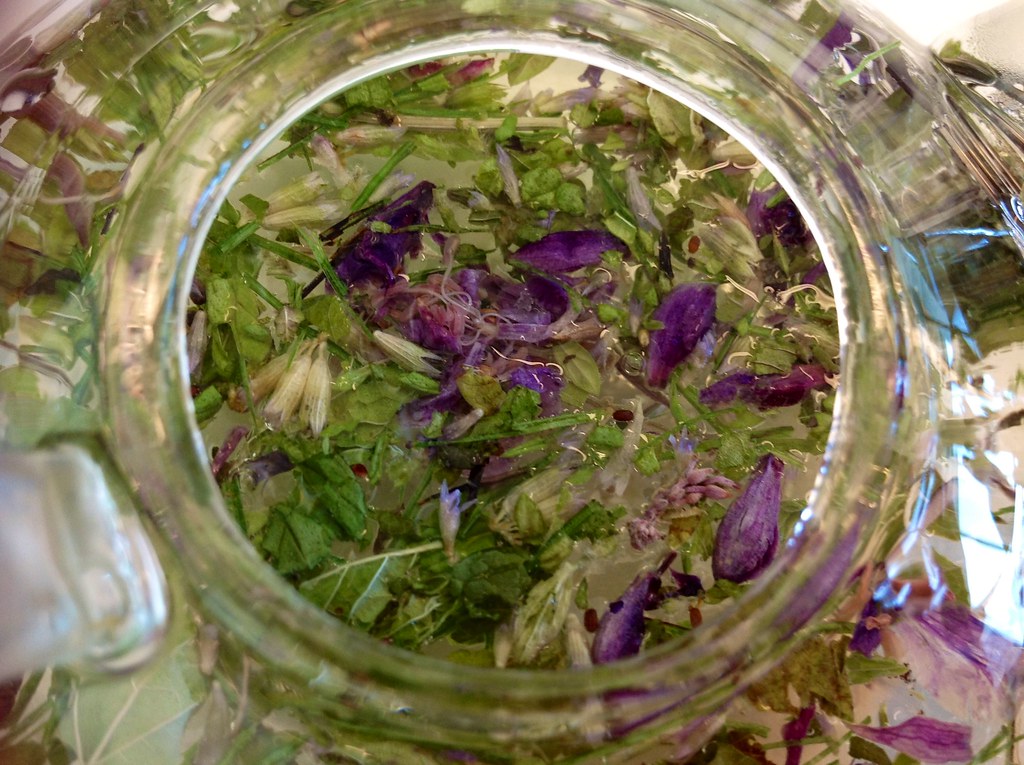
I swirled around the purple petals giggling- I was prancing about in a hay meadow in the first few sips.           But anise hyssop has a relaxing effect so the feeling settled to lying in the green grass. How did Israel know this is exactly what I needed? 

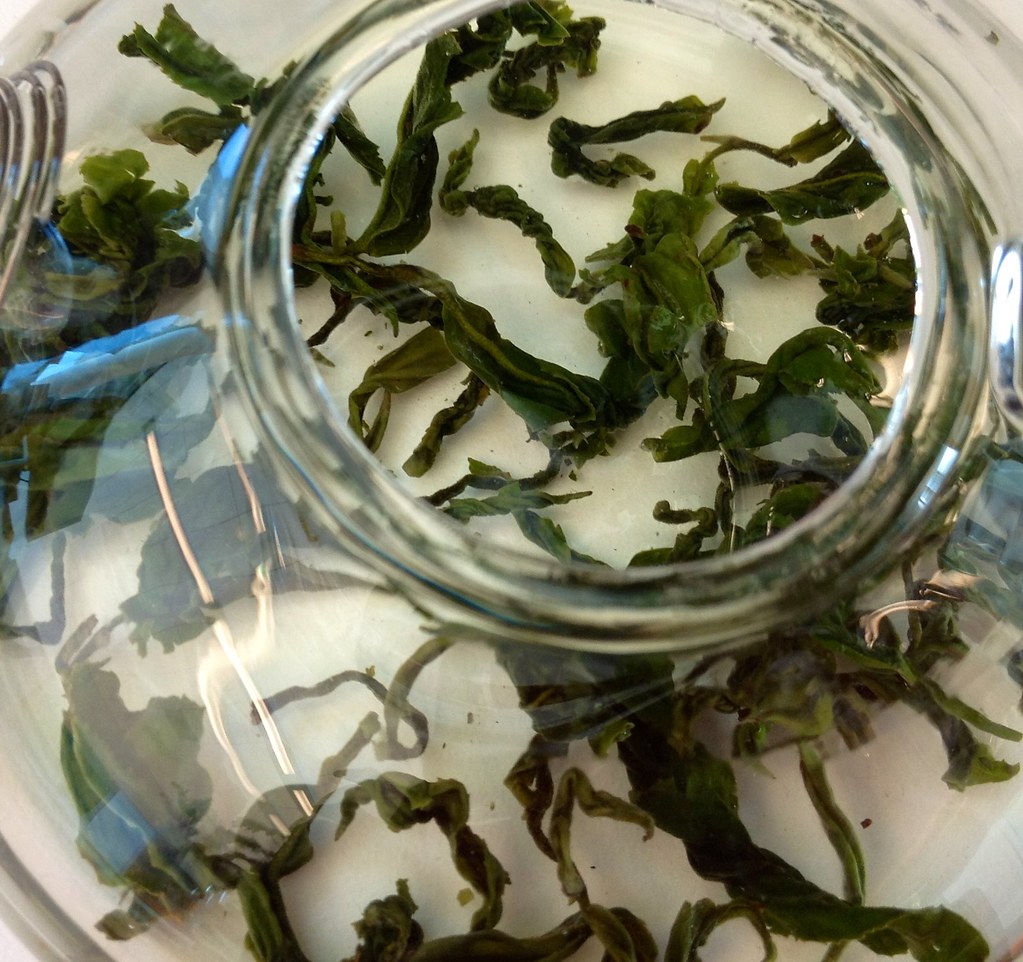
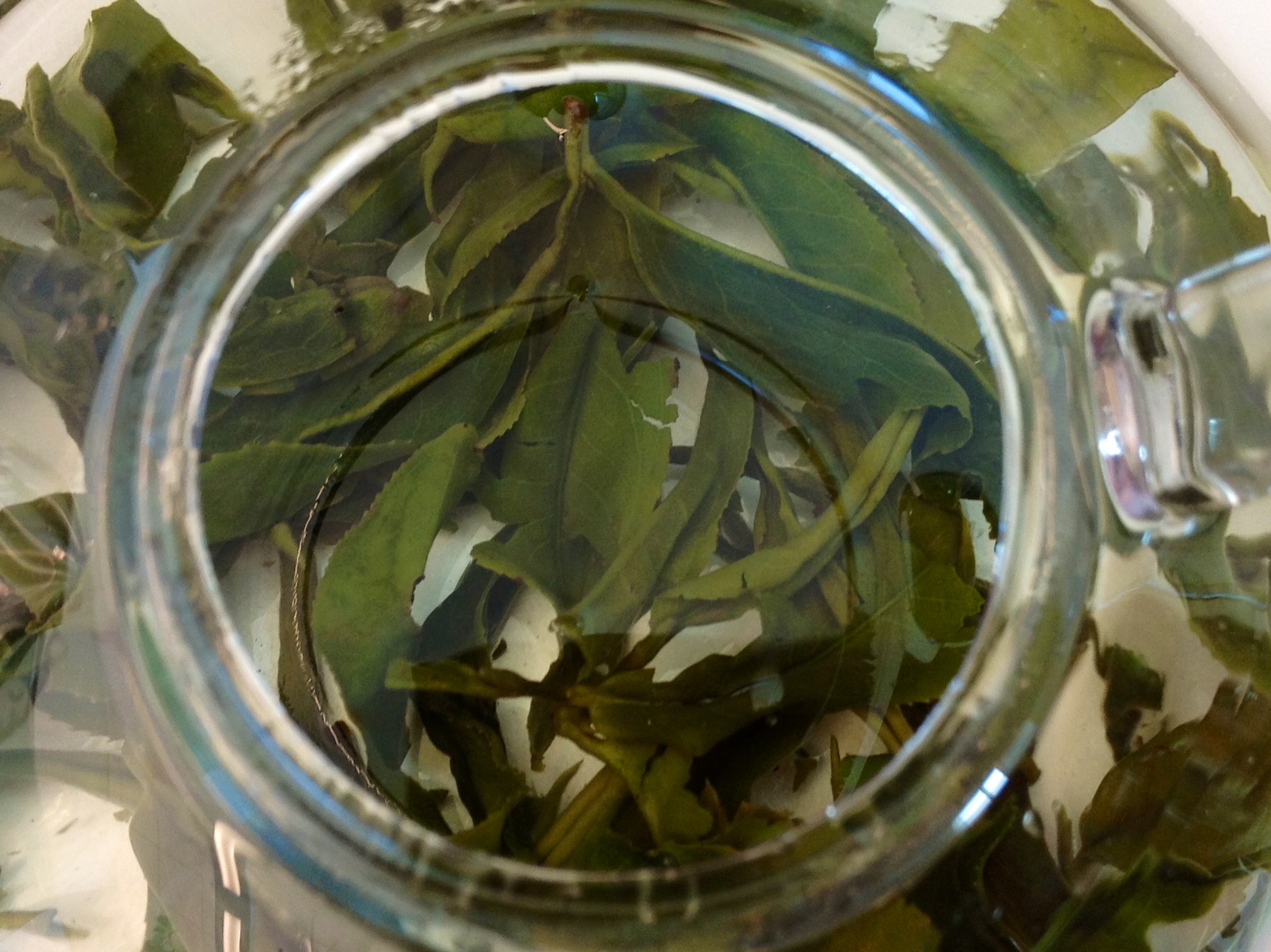
You can see from the photo below that I could not wait to try the Spring Bi Lo Chun. (I tried to hold off Israel but life got too hard without tea and I dug in at work this morning. And now as expected I am wide awake at midnight!)  I too once upon a time eagerly awaited for the year's first spring Bi Lo Chun. This was all before puerh. 

And as far as Bi Luo Chun goes, it's all very fine with a grassy nutty nose that I could sniff forever.   You may have heard the myth behind the old name of Bi Luo Chun used to be scary fragrance(嚇煞人香)  and the unlikely story involves some tea leaves that got stored and heated between a tea picker's -ahem- bosom when her basket got full.   Ming Dynasty(?) men probably were not breast men- otherwise it would be something more like "enticing maiden fragrance". (You would think some enterprising merchant would have already recreated such a tea but this particular Bi Luo Chun from Stephane I believe is just hand rolled. )

There is a simplicity and seasonality to green tea that appeals to me now in a way it hasn't for the last 10 years.  You don't have to obsess about how it's going to age, you have to enjoy it for what it is now, not what it is to become.

Chinese are ever so wise with their cycles and I guess I have come full circle back to green tea.  Thank you Israel.