Showing posts with label water. Show all posts

Friday, March 15, 2013

Water Taste Experiments - Hario Buono vs Paico

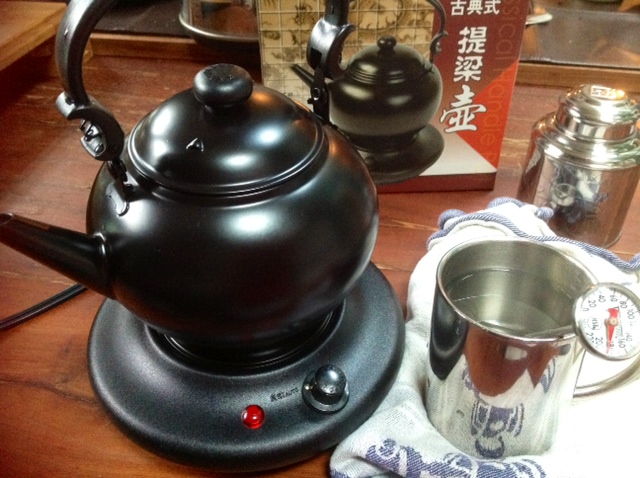
After wistfully reading Petr's lovely series on Heating Water on Charcoal, I vow to get an outside setup going.  But for this fine spring day, I have to make do with what I have. Today I'm trying to see if there is a difference between gas stove boiled water vs. electrically heated water. It's a battle of the goosenecks in my house today.  


You may be surprised to see the much maligned electric Hario Buono on the left after my repeated tirades of it producing burnt plastic water. I finally figured out how to get rid of this deal breaking toxic taste. After a few minutes of persistent wiggling, I was finally able to pop off the toxic smelling plastic cap which prevents water from dripping into the heating element. Ironically water was condensing on the cap dripping into pot which ruined the water.  I had tried multiple times previously to pop it off but I was afraid to damage the heating element and I wasn't sure how it was attached so I didn't exert enough pressure.

I looked through all my drawers to see if could fashion a stainless steel version of this top cap even bending a silver spoon and a cookie cutter.  After being so easily defeated, I repeatedly poured hot water and baking soda on the cap until the smell was no longer noticeable.   My husband who came home just now offered to make me a new metal cap but since I had already spent two hours willing the toxic residue out if it, I declined.  I am happy to report this teapot is now back in service just in time to replace the rusting Kamjove which I had bought to replace this Hario Buono.

To make sure the Hario Buono was acceptable, I sipped just plain hot water in various cups as well as "brew" the water in teapots. While I could not taste any stainless steel residue in the various ceramic cups, there is a particularly drying quality to the hot water which lessens as it cools down. I also drank the water in stainless steel cups and you could definitely taste the iron and metals. The more water you sip, the more you become attuned and the sweeter the water tasted. Even with my unreliable palate, I could taste ever minute differences between each of the cups of the same water.

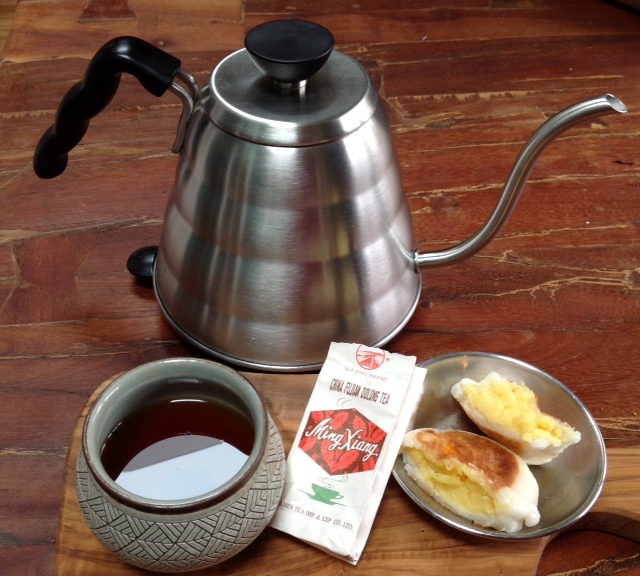
The other shiny bell shaped stovetop kettle is a Paico which arrived two hours ago hot from Kowloon to expand this experiment.  I do detect a subtle difference between stovetop and electric heated water but since the two kettles are different despite them being stainless steel, I cannot definitively attribute the taste difference to either mode. The stovetop water has a less drying taste- more refreshing but not as refreshing as the stone pot.

A few days ago in a fit of late night bleary eyed impulse, I ordered this bell shaped stainless steel Paico stovetop kettle. When I showed the ebay listing to my husband the next morning, he rolled his eyes and promptly dinged me on two counts- aesthetics and function. He said it had the wrong kind of flourish and he could already see that the handle and top would be too hot to touch. He was right of course.


Wednesday, March 13, 2013

Stainless Steel Safety of a Rusty Kamjove

Drats. Even after less than a month of use, I noticed these rust spots inside my new Kamjove teapot at work. Cheap Chinese stainless steel strikes again. Probably not enough nickel. This teapot is most likely the lowest grade 200 series stainless  steel. I'm resigned to such low quality steel by now as the cookware market is flooded with 'em.  I haplessly thought my blood cells need extra iron from the rust but the sad reality is that the body cannot use such inorganic forms of iron. Overusing a tetsubin is probably a road to kidney and gall stones.

Many people assume quality stainless steel is completely inert.  Even high quality food grade stainless steel (18/10 and 18/8) still leaches out trace amounts of iron, chromium, manganese and nickel- all "supposedly" in safe amounts.   But the hexvalent form of chromium in stainless steel is not the form that the human body uses. Double drats. You could go for a glass kettle if you want to keep your water pure but most likely your water traveled some distance in steel pipes if you use tap water.

Modern life is so full of uncontrollable chemical complexities. I spend a lot of time trying to avoid synthetic estrogens in plastic but in reality if you eat out a lot like me, you have to accept you have little control of what happens to your food before it reaches your gullet. Most restaurants store foods commonly in plastic tubs.  Suppliers to restaurants also package foods in plastic. The taint of plastic is nigh impossible to avoid in the modern food chain.

I bought this cheap Kamjove in full knowledge of the risks.  I'll keep using this teapot. It's definitely safer than a Roman leaded pewter pitcher and to be preferred over a kettle with plastic parts.


Sunday, February 24, 2013

Boiling Water In a Stone Pot

My desire for a tetsubin came about when drinking tea with Ira- her's produced a noticeably sweet delicous rounded water.  Even though I've budgeted sufficiently for a tetsubin iron kettle, even picking a reasonable candidate out from the ether is sapping my brain strength.

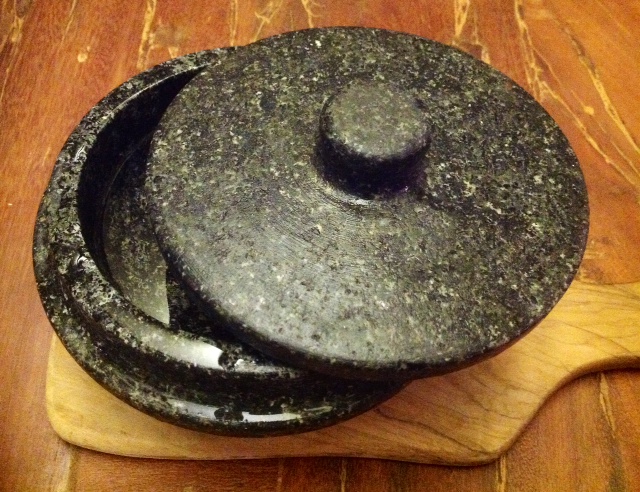
I've been hit with a fit of spring cleaning lately and a solution for deferring a tetsubin purchase presented itself to me. I used to make rice in this Korean granite stone pot called a dolsot and the rice tastes extra nutty when cooked thus. And although this particular stone pot can boil only small amounts of water which has to be ladled, it was worth trying with tea tonight.

As it is Sunday night, I made mugwort tea for winding down.  The tea brews extra refreshing and smoother than usual-  the tea just glides across my tongue. When I taste just the water- I can taste a slight mineral profile. I hope I don't get kidney stones but probably I need the trace minerals.

A small part of me knows I'm not the kind of mindful person who can take care of a tetsubin. (Actually I already have a rusting one on top of the fireplace that I use as a steam maker.) You can definitely leave water in this stone pot overnight- one just has to be careful not to pour cold water in a hot pot. And if it does break, it's less than $30 to replace. 

Tuesday, February 19, 2013

Reboiling Water with a Kamjove

This teapot arrived from birdpick.com on Monday and it only took one wash with detergent and two boils to produce perfectly acceptable water for delicate tea.  I brewed up a floral oolong from a Taiwanese neighbor and the result was as floral as ever.  Although this teapot is a bit chintzy and offends my sensibilities,  I'm utterly grateful not to have any off taste in the resulting water.  


I had vague notions that reboiling water makes for flatter tasting water and hence less tasty tea and so I purposely got the smallest 3 cup model.   The arguments against reboiling appear to hinge around decreased oxygenation levels.  I have not comprehensively and objectively confirmed this prejudice but a simple casual experiment with this Kamjove would indicate that reboiling does not appear to significantly impact my taste of a tea or the underlying water.
 
As a safety feature to prevent water from boiling when empty, the base has three little pins that push down when the teapot is sufficiently heavy to trigger a boil. But even when the teapot is half full, it's fits a bit wobbly and I have to manually hold it down to get it to boil. It's not my dream kettle but it will do. Also it is very quiet compared to the jet engines of the Hario Buono. I really wonder how long this contraption can last.  At $37, I guess even yearly replacement should not injure the wallet too much although I would much rather invest in a long lasting deluxe kettle.

Friday, February 15, 2013

Electric Kettle Woes

I've been tea miserable at work.   After days of research,  I paradoxically ended up with what turned out to be the worst kind of electric kettle.  I exaggerate as the worst kind of kettle probably would have caused an electrical fire and burned down the building. The boiled water from this Hario Buono merely ruins the taste of any tea I try to brew. Otherwise, it's solid and the gooseneck provides superior control  and I'll be more than happy to use it as a watering can for my plants.

This tea kettle had no Amazon reviews at all when I sprang for it.  I was lured by the stellar reputation of it's stovetop counterpart.

This Hario Buono has a plastic cap on top of the vertical heating element and although the water does not touch this plastic part, the steam condenses on it, drips down and causes the water to taste quite toxic.   The burnt plastic taste and smell to the water outright kills any tea even the lapsang souchongs.  For pathological reasons unknown to me, I've been soldiering on with this terrible travesty of a kettle.  Two+ months of use has not yet lessened the smell.

Last night in final frustration, I was determined to start life anew with a superior kettle. After rereading every kind of complaint ever recorded against electric tea kettles on Amazon, I was at a loss to order yet another faulty specimen. What do these unhappy consumers of inferior kettles complain about?

  • overall chintzy parts that don't last or become a safety hazard (stopped working, it leaks,  melted plastic base,  handle fell off with boiling water in it)
  • rust spots form in the interior 
  • water tastes awful - complaint of metallic taste for steel pots and  plastic taste for kettles with plastic components
  • takes too long to boil
  • sounds like a jet engine taking off

I can't seem to find a quality durable electrical tea kettle without plastic parts. I think Sir Dyson should set his attention to this most grievous problem. At home, I have a trusty Russell Hobbes that I've been using for ten years but the new versions are no longer any good. In a fit of bleary eyed fatigue, I sent away for a Kamjove from birdpick.  If I'm going to buy some cheap Chinese made kettle, I might as well get a kamjove. Although I really wanted the titanium-plated golden hued Kamjove, 200V is a no-go for me at work.  My husband in a fit of generosity offered to hook up a 200V outlet for me although he said after a single glance at the bell shaped kamjove- "It's not going to change your life."