Showing posts with label mold. Show all posts

Friday, September 26, 2014

Plastic Bag Mold Disaster or Just Humid Storage

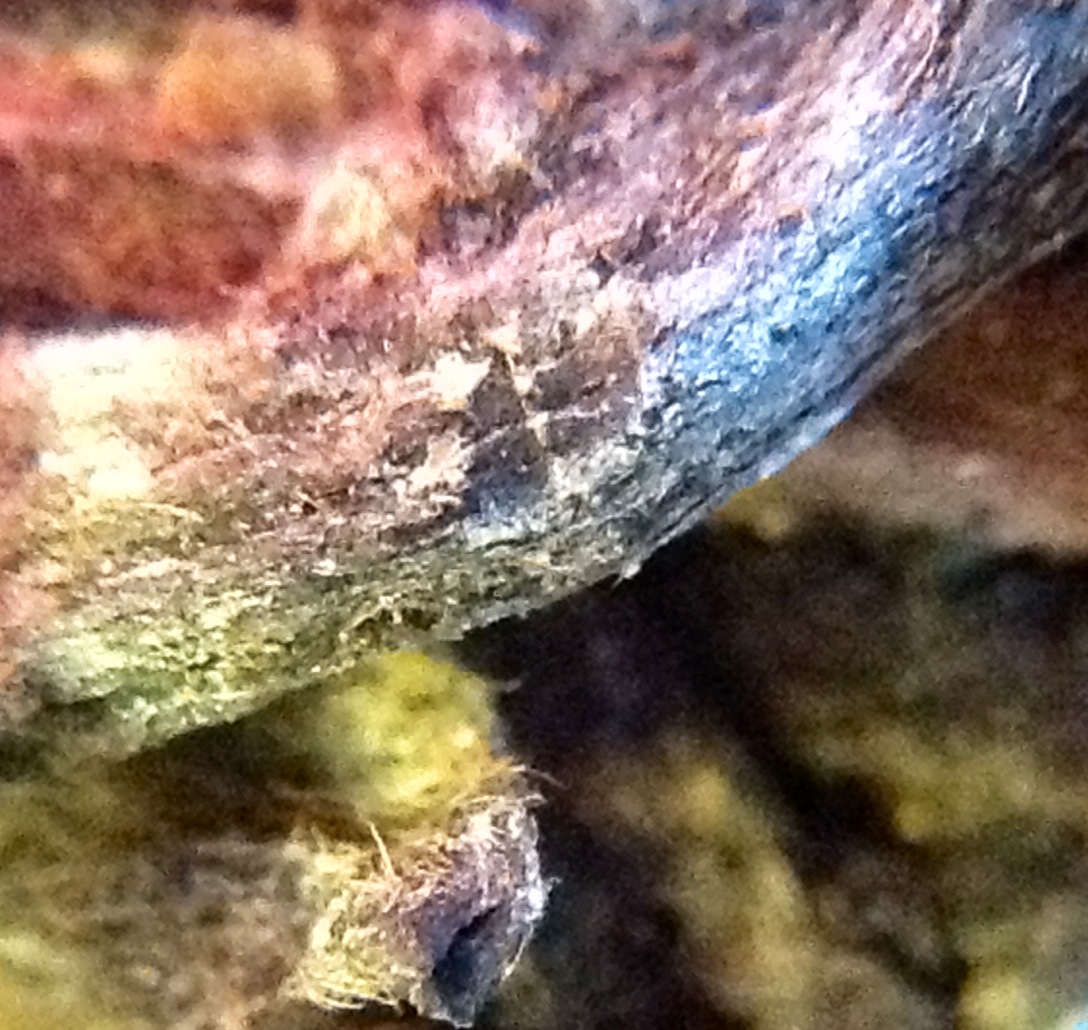
I can hear Professor Z's stern tut tuts across the vast oceans - yet another hapless home aging experiment gone awry.  I had stored some pieces which had been conditioned with a bit of extra humidity then stored in plastic bags-  I had been monitoring those pieces quite closely twice a day until last week. I had a serious work deadline last week and forgot all about this experiment.

The damage isn't so terrible- just six chunks of mediocre tea which I was experimenting with. All less than a pound of tea.  As my husband says- "Hey, you've got more stuff you can look at under your new microscope."  Yup. 

After reading this fascinating article in the leaf I am a little more reassured:
 http://the-leaf.org/issue4/wp-content/uploads/2008/12/puerh-storage-part-222.pdf

But there's lots of different white molds in the world and not all white mold could be indiscriminately good. I posted a craigslist posting to get help identifying them. In the spirit of science, I was going to do a few more experiments with these samples.  For starters, I was going to cut away the sections of mold and store them in tiny baggies to build up my tea mold library and see if they bloom any further.  I was also going to remove as much as possible and keep on monitoring the chunks to see if the mold comes back.  Then as is such time passes, I was going to sample some of the tea.


(My husband wanted to make sure he got photo credits as my lab technician.  My hands were to shaky from brewing up too much tea earlier today.)

Monday, September 15, 2014

Brick Under a USB Microscope

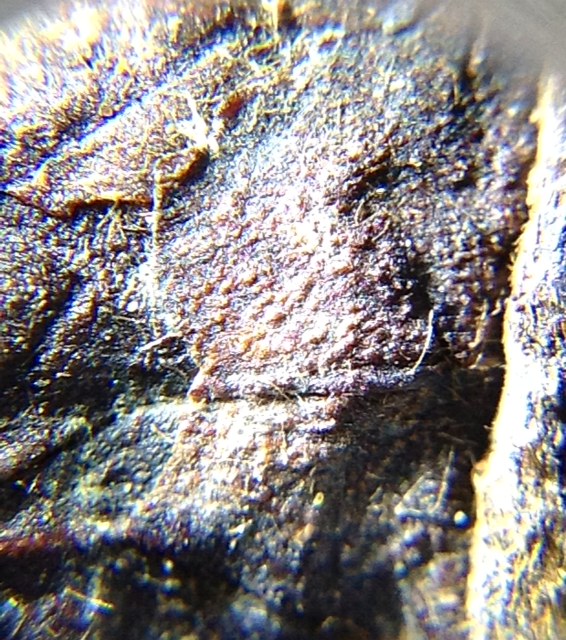
Although I ordered this digital microscope on Ebay only last Saturday, it arrived today due to the joys of inter-California commerce.  I was able to get a slightly better image of what looks a fruiting head on my moldy 7581. This magnification is about as good as it gets- it was advertised as 500x but I am dubious.  But for $60, I won't complain.  I guess I can give an impromptu dental or dermatological exam in a pinch. Actually the kit comes with some suggestive plastic attachment probes.


Even with inadequate resolution, you can see that the heads are not very symmetrical like the pom-pom like images of other aspergillus.  Also the head is too dense and not conical shaped enough to be penicillium which has more like a fennel seed head.  I looked up the mold images and consolidated them in one page so I can devote serious study to them all weekend:


Yesterday while searching for tea mold images, I saw pictures of these shus with "noble mold" from puerh.fr:
This "noble mold" looks greyish rather than white, more frosty than furry.  I need to find a tea-loving microbiologist on craigslist to get to the bottom of this mystery.   It's all fun and games until I have to throw a brick out.

Saturday, September 13, 2014

A Furry Brick


This morning, my eyes nearly popped out seeing these fuzzy white hairs growing on this tasty 06 Lucky 7581.  How? What? When? Why?

I give my shengs frequent visual and sniff inspections multiple times a week mostly to check for signs of life. The Bay Area being touted as a dry god-forsaken place for aging, I have to obsess about teas drying out to mummies.  However I haven't been too diligent about my shus which do okay in this low humidity.   

This neglected brick had been stored just only in an outer basswood box in a loose opened plastic bag mostly to keep the crumbs together. The last time my eyes laid on this brick was probably two years ago.  All the panicky thoughts raced through my feeble mind. What else got contaminated? Should I never be using a plastic bag at all? What about my idiotic new sealing strategy!  What about Saint Hojo of Sealed Pu?

I couldn't just open up my other shus then and there to do a mold check in case contaminating spores became airborne.  I ran a HEPA air filter for a few hours to clear the air.  While I was waiting,  I looked for options to identify this white mold while brewing up some of the unfurrified chunks (the mold appears not to have improved the flavor).   I considered DNA analysis but the test only looks for Stachybotrys /Aspergillus/Penicillium molds that are commonly found in homes.  If it's not one of these, then I just wasted $62 dollars.

If DNA is out, then microscopy and visual identification was the next option. The only microscope rental service I could find was UC Berkeley's Electron Microscope Lab which would be over-kill.   I opted for the more flexible option of my very own digital 500x microscope which will arrive mid next-week. Before I casually take a toothbrush to this brick or chuck it altogether, I just want to make a final attempt to identify this white fuzz which looks similar to the fuzz I found in the shu stored in the ceramic jar.

After the air had been cleared, I opened the shu brick box and the other tea were completely pristine as much as shu can be.  I checked every single item of shu some of which were also in open plastic bags for containment and everything was clean.  I've had shu samples from multiple vendors in plastic pouches for years without any mold trouble.

So in the nine years of storage, I have had two mold incidents- one involving shu in a closed ceramic canister and this here brick.  This brick must have had more initial mold before it came to me than any other shu I've got- i.e. the furry white mold was already dormant in the brick and not seeded from my house. I will use only paper or wood storage for shu except the samples in their plastic bags for now.

For the sheng's which I store mostly in basswood boxes, the few that I put in closed plastic bags I've opened the seal and will monitor them closely.  I cannot wait to get my hands on the digital microscope to give my pu a full inspection. 


I was so distressed today that my sweet husband tried to cheer me up with oysters.  I greedily gobbled up more than my fair share.

Sunday, September 07, 2014

Good Mold Bad Mold

Fellow tea drinker Mat from Germany generously shared with me the paper "Identification and quantification of fungi and mycotoxins from Pu-erh tea" which I've read and reread to exhaustion.  Instead of contemplating the bucolic views from this lovely treehouse yesterday,  I hunkered down with this stiff yet illuminating scientific paper which offered a few nuggets to chew on.  Much to my husband's delight on our anniversary weekend, I kept going on and on about mold and mycotoxins but he is used to my ways and is most willing to pay the price of admission as they say.

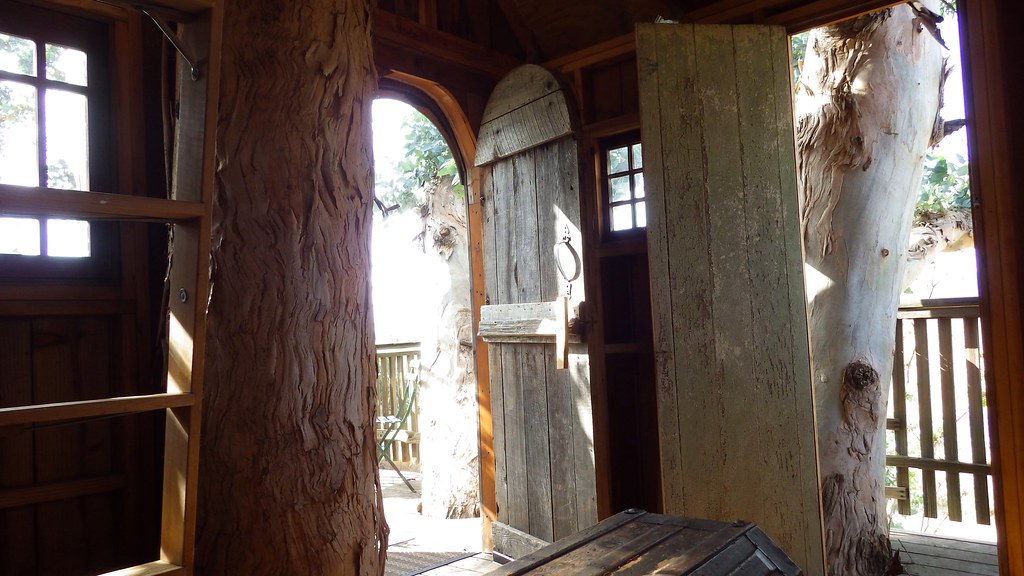
 (This off-the-grid treehouse had strict rules forbidding fires of any sort so I resorted to drinking pre-brewed aged oolong lukewarm in a thermos.  Experience of sleeping three stories up in a tree felt very different than what I had imagined as a little girl.  A living tree creaks and sways constantly and if I were to build my fantasy treehouse, I would build it in the shape of a boat.)

This study published in the International Journal of Food Microbiology took 36 different puerh samples (25 loose tea of organic and conventional production, 11 compressed) and tried to isolate and identify the molds and mycotoxins present. The study does not explicitly indicate whether shu or sheng was used but I assume they used all shu samples as the authors describe the wodui process in the introduction.

The authors found no less than 31 different molds with compressed samples being less colonized than the loose shu.  Aspergillus acidus was identified as the main beneficial microbe in fermentation. Not all molds are beneficial and the study was looking for contaminant molds which could potentially produce cancer causing organ destroying mycotoxins.  The study specifically targeted the following three fear-inducing baddies- aflatoxins, fumonisins, and ochratoxin A(OTA).  I'm happy to say that only OTA was found in extremely insignificant amounts in only four of the loose shu samples.  


How do these findings translate for the puerh drinker?  One- it's always good news when mycotoxins are not detected in your favorite brew especially by those who might benefit by doing so.  Three of the authors of this paper work for R-Biopharm that makes an Aflatoxin screener and so they would have had cause to try to find toxins in puerh. Two - you could rinse your pu at least twice but note mycotoxins are not water soluble and not all fungal spores are killed by boiling.  Three- it appears there is more contamination risk in loose shu than compressed forms.

So what should you do when you encounter white furry hairs growing on your pu?  I keep small amounts of shu in ceramic jars to mellow out before brewing and this 2004 CNNP had developed a patch of white mold more than a year ago.  Yes, even in cold dry Berkeley, this can happen even without the aid of a pumidor. This mold is pretty slow growing as it barely doubled it's size in a year.   I couldn't bring myself to pitch it and kept it in the kitchen in case the taste developed into something special.  

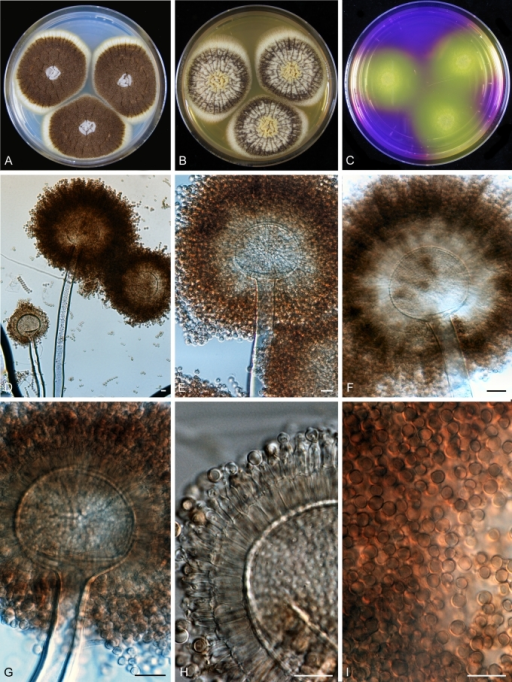
I tried to look up images for the molds in the above table for compressed shu. You can see that fuzzy stuff under macro is seriously filamentous white mold that hasn't fruited.  I almost expected a tiny little spider to be doing a brisk business down there. I will need a more than a powerful microscope to be able to identify this bit of fuzz.
I read on tea forums that white mold is not cause for alarm and can be brushed away.  But when encountering visible mold without positive identification, each tea drinker must assess their personal level of comfort in risk taking depending on their current health. Pregnant ladies and those with shot immune systems should take caution.  But those willing to take the risk should consider the payoff.  I brewed up the unaffected bits and it was boring old shu with the slightly metallic opening taste that did not get that much better.   I pitched the rest.  Had this been a twenty year old specimen with magical taste, I might have soldiered on.   


Tuesday, September 02, 2014

Fermentation is Mold Magic

The web is full of stern admonition that boring low-grade sheng becomes boring low-grade aged pu.  But anyone that's ever tasted sauerkraut knows that boring sad limp cabbage can still transform into something wonderfully complex.  Why can't boring factory sheng transform into a mouth pleasing tongue tingling brew through the magic of fermentation?

No shortage of bloggers including myself have been disappointed with poorly aged stomach killing teas.  What could have gone wrong there?  Let us postulate ever so unscientifically as I am fond of doing in this blog.

Puerh fermentation rests on bioactivity of beneficial molds. Yes molds!

I've read in various studies that some of the following micro-critters are responsible for fermentation in puerh:
  • Aspergillus acidus - picture taken from NIH above.
  • Aspergillus fumigatus - not a friendly bugger. It's the mold commonly found in compost piles and can cause repiratory infections in individuals with immunodificiencies.  I really should think twice about huffing shu so indiscriminately.
  • Zygomycetes - is a pathogen rather than a friendly fermenter. Must read paper and update...
  • Penicillium - ditto
  • Aspergillus Luchensis - tasty koji mold

It's clear even a tiny chunk of puerh is a microbiome where various colonies of fungi eke out a balance. Just as sauerkraut fermentation can be ruined when the wrong kinds of bacteria and molds taken over, perhaps the badly aged tea suffers an imbalance of beneficial fungi. 

The paper I am hot to get my grubby paws on (Identification and quantification of fungi and mycotoxins from Pu-erh tea) mentions that 4 out of 36 puerh samples contained the dreaded mycotoxin Ochratoxin AOcrhatoxin A produced by unfriendly mold is a carcinogenic as well as a neurotoxin that may give you nightmares about pu drinking.  Actually Ochratoxin A is so prevalent in the food system that there is actually a TWI (Tolerable Weekly Intake) guideline esblished with some foods like licorice and ginger having elevated amounts. I probably ingested some today. Whew.  No need to give up my pu.

I'm so curious about the tea taste value of those 36 samples? Did those 4 teas taste differently in a negative way or were they still palatable or even interesting?   

Last weekend in the car I asked my husband, "Why do I like tea so much?" He said without missing a beat, "What's there not to like."  

UPDATE 9/4 Mathias has most generously shared the mycotoxin paper mentioned. My walnut is exploding with so much excitement.  Dear reader, I will take this weekend to digest this paper and report back to you. 

Monday, September 10, 2012

Midnight Shots of the 05 CGHT

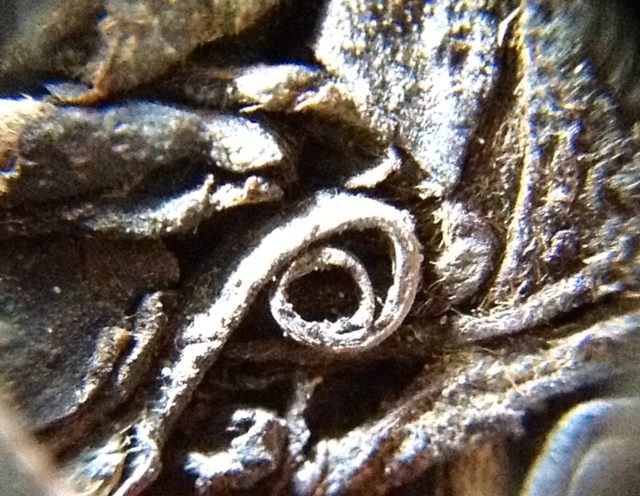
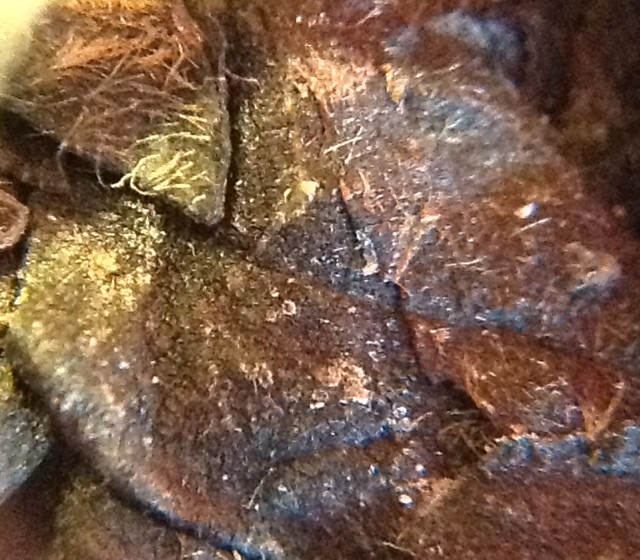
Last Sunday night I had every intention of tucking into bed at ten in preparation for the coming Monday work day, yet I found myself curiously hunched over my desk attempting microphotography of the corked 2005 CGHT way past midnight under the worst of lighting conditions.  

Ira had written to let me know she retasted her beeng side by side with a piece of MarshalN's sample I had given her. She found her beeng even after initial airing to be still "really gross". Can I visually detect this "gross" flavor with a $3.50 microscope? MarshalN said I should see spores or "little plants" if there is mold (not a definitive indicator for grossness).  I might simply need a higher power microscope than this budget 40x. 


Actually, this late at night- it's just mesmerizing peeping in on tea leaves and I'm really taking portraiture. These are just another alternative to the beeng and leaf shot and I will need a good repository of such photos to even gather patterns.  For now, I'm just  trying to get the weirdest furriest shots possible. The bottom right looks like a worn out footpad of a bear.   


A casual blogger like me is faced with a choice- write more frequently compromising quality or produce more slowly giving the posts the loving craft that it needs.   I can't take the Hobbes haiku route since my poetry takes even longer to produce.  So I may from time to time just resort to micro-photography.  

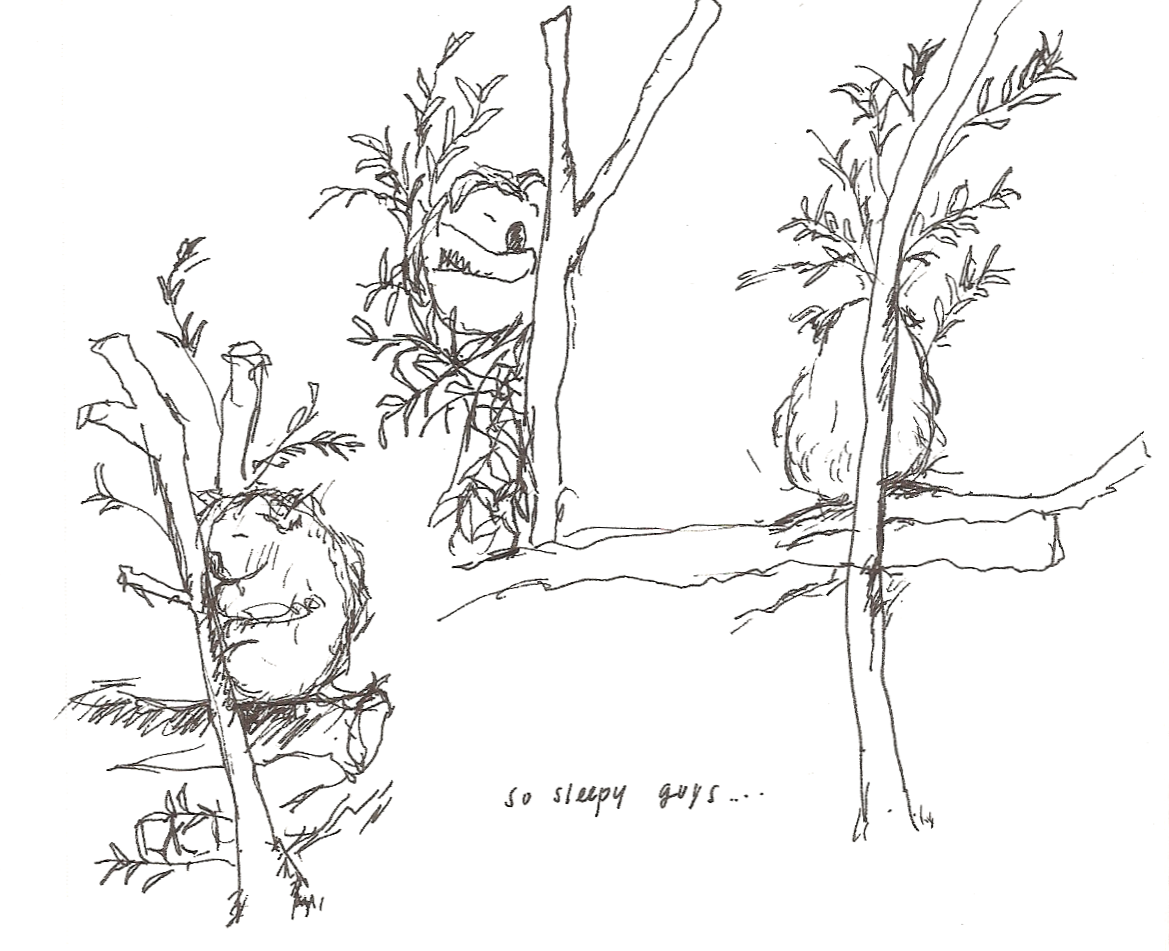
Sketching was another avenue I considered but I'm a slow sketcher too. I took this sketch from the San Diego Zoo of koalas sleeping.  I put it in just so I'll go to bed now. Good night- I am totally going to sleep early tonight!