Showing posts with label shu. Show all posts

Monday, October 25, 2021

Shu oatmilk latte + other abominables

A few years ago when I used to prance around downtown Oakland for noodles and bobas, a new boba joint was offering puerh macchiatos. At the time, I was curious (and somewhat disgusted)  but not enough to forgo my usual matcha latte.  And now that cafe is long defunct and I no longer frequent boba joints. 

A few months ago, I had been quaffing some pretty good shu ('09 YS Lao Cha Tou Sheng Yun) and it was not flagging anytime soon.  There's only so much straight up shu a girl can take.  At the 5th brew, I decided to switch it up with some oatmilk remembering my missed opportunity.  It wasn't so bad and soon this combo grew on me that I finally finished last of my brick that I opened in 2017.


Whence came mold?
I went to fetch a new brick only to find white mold spots on the outside wrapping. The brick underneath appeared to be unharmed. It's been a really humid week with the pineapple express drenching the Bay Area with buckets of water.  Inside the teacloset it's 41% RH right now. The shu is stored outside in the overflow area which is at 50%RH.  I guess it's good that there's humidity enough but one doesn't want a mold outbreak either.  I'll have to do a complete inspection which I haven't done in several years.

This lao cha tou and my other shus in general has not aged well, the exception being the lighter shu with a sheng blend. The earlier lively tastes from a few years ago are no longer present.  There is some controversy over whether shu can age and I would say paying a lot for aged shu is probably not the best idea.  

So what to do with a cabinet full of badly aging shu? It's definitely drinkable and at worst I'll have it as latte. The oatmilk really rounds out any off fishy flavors. There are purists who think milky additives are an abomination on proper tea. While I wouldn't defile high quality leaf this way, I'm going to take any route that makes my  shu more fun to drink.

Saturday, October 25, 2014

7452 601 vs 901 Red Ribbon Party

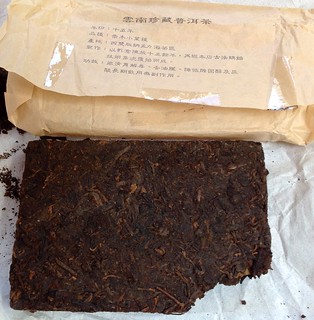
Yes the tea closet has become a shu closet.  Instead of the over-exposed oft-blogged about Dayi classic- the 7542,  we transpose the center digits to end up with the humble shu cousin 7452.  The wodui process was invented in 1973 so you can see this early recipe from '74 was good enough survive four decades.  Lightly fermented recipes like 7452 technically leave a little more hope for improvement in aging and if you have to hoard shu- they can be a better way to go.  In the eight years I've held the 601 cake, it's become a few notches more interesting but not so compelling that I seriously regret not hoarding a tong.

Two pointers for Menghai shu noobs:
1. Batch numbers indicate year and release, i.e. 601= 1st batch release of 2006 (although could also be for 1996,1986... with the decade inferred) and 901=2009 first release. Of course the first batch has higher collectible value but whether or not it potentially indicates slightly higher quality leaves is not always clear.  I've never had a side by side tasting of different batches for the same year so I cannot say but I've had first, second and third batches which seem to have that consistent Menghai quality.  The 601 was released in May of 2006 while the 901 was released relatively late in October.
2. 7542 is not a recipe made consistently every year.  The red ribbon here just denotes that it was re-released after a hiatus(sometimes as brief as a year) and that it is the first batch of that year.  Given the puerh boom and difficulty in getting decent maocha for even sheng, I'm not surprised Dayi did not release a 2008 version.  Does the red ribbon in your cake count for more than an extra special feeling?  As with anything in puerh, a red ribbon alone cannot be trusted as a absolute mark of quality.  I've had pretty good cakes that do not boast that special red ribbon and red ribbon cakes which are not that exciting. Sadly the 901 currently belongs that latter group.

Is there a logical color coded scheme to reflect fermentation levels on the Menghai shus?  Lighter recipes like the 7452 appear to be wrapped in a burnt umber cover. However supposedly moderately cooked recipes like 7572 came in a dark chestnut brown cover in 2006 but now have a raw umber print. What to make of the yellow wrapper for the 901?  Does this indicate a lighter fermentation than previous years?  On visual inspection, the 901 pictured left is noticeably lighter that the 601 but three years is not a significant amount of time to transform.  But the post mortem does not confirm my hypothesis.

901 is an initial disappointment-somewhat flat and quiet; I may need to condition it inside a ceramic canister for a month or even let it rest a few years.  The 601 back in the day was not terribly impressive either and that is why I didn't buy more.  I brew up the 601 today and immediately the more lively mouth feel makes me feel I might do well to have a few more 7452s on hand.  I'm on the fence now whether to buy more 901s but I need not worry as someone has already bought the last 20+ cakes from YS as Scott had maintained an unusually low price of $27. You snooze you loose in the world of puerh.  The 601s go for $65+ with high risk of fakes so I'm not tempted.
Despite the pending dangers of missing out, My husband gave me a stern stern talking to about not pre-buying more tea to fill up the new cabinets he is building over the winter. My desk is always unusable but it's become an eyesore with Kunming Post boxes piled high. The photo shows about 10 days of shipments. I can't get any more until I clear this backlog some how...  

Monday, October 20, 2014

Revisiting Lao Cha Tou

Even amongst my gardening friends, I am considered a serious composter with 4 separate bins.  Every season, I hand sift the black gold for worms to put back to work and I am quite familiar with clumps that can form at the bottom of a compost pile.  I've manually busted up hundreds of such compost nuggets to spread in my vegetable patch.  So when I first read about lao cha tou- "old tea heads" from Corax on cha dao so long ago, I didn't jump on that wagon as I just didn't want to be reminded I was essentially relegated to drinking compost.

Although considered a waste product that's been up-marketed during the puerh boom, pu drinkers need not be so snobby about lao cha tou. Like every thing else in shu, there's delicious lao cha tou and atrocious disgusting lao cha tou(I'm looking at you 2009 CNNP LCT) and everything in between. The genre itself does not automatically discount quality.  But smaller cha tous are to be preferred over larger coarser tea heads.


 I tried my first lao cha tou two years ago on the recommendation of fellow shu drinker Jon Grebe who called them "silky".  I disastrously started with the 2009 CNNP Lao Cha Tou which was so disgusting, I've segregated the canister to the highest shelf in my kitchen.  Really I would never buy new CNNP except that it was convenient to include it with my order from a certain factory certified vendor (ahem..) that generally has tasteful cakes- I did not dream he could carry something so shockingly heinous. But to my consolation, it was only $6.50.

Lucky for me I kept looking and found the YS 2009 Cha Tou Sheng Yun brick - and it remains the only shu form(brick/beeng/tuo/melon) I have ever finished in my entire life.  This particular cha tou brick has a rich complex fermented fragrance that none of my other shu's have- the smell is more akin to wine than wodui and I regularly whip it out just to breath it in.  The brew is mellow sweet and lovely but not as incredible as it smells.  I've tried a few other specimens even the 2011 YS version but nothing stokes my fancy as the 2009 version pressed with nuggets fermented in 2007.     Scott claims you can brew his brick 25+ times and I've never taken him up on this challenge as I get shu-ed out after 12 brews.  To brew lao cha tou, Ira instructed me to soak them in cold water for 5+ minutes and it really helps loosen up the tight heads.

In puerh- one cannot be discouraged by traumatic experiences.  One also has to make the most of a shu demotion and I for one am happy to find something I look forward to drinking. 

Sunday, October 12, 2014

Red Dayi 2000 or Not

After multiple shu giveaways, I am now reduced to about 40+ different shus including some premium Dayi that I rarely bother to drink. I have dozens of shu samples that I haven't even bothered to brew. Why I even spent precious tea money on more shu - an aged Dayi of dubious authenticity- does not make logical sense.

However like any jaded tea buyer, I just want me a little excitement and mystery now and then.  Truth be told, I'm not even a Dayi fan but I sprung $75 to satisfy my curiosity about this cake.  I knew this wrapper looked suspicious because of the BEENCHA being smooshed into one word. However it was the very same wrapper at Vancouver's Chinese  Tea Shop that really egged on my interest.


When I received this cake, I had one final chance to still back out.  I knew even as I tore in that it was a fake but I still wanted to know if a tasty aged shu was masquerading behind that facade.

The beeng was a lumpy dirty mess- hairs, plastic strings, miscellaneous fibers; I do not think this cake is Menghai quality even at their worst.  Dayi is the most faked cake in the world and this is the first one I have knowingly encountered.  I'm never deterred by something so benign as hair or string so I brewed it up straight away.

Judging by the number of stems present, this tea was made with grade 9 leaves or as advertised-  "thick bold leaves".   If it were a Dayi, it would be a 7592 or a 8592 recipe which are fine mellow recipes.  However the brew has latent muddy undertones but otherwise is a shu shu- woody and earthy.

Gambled and lost.  I think fake Dayi stories rarely have a happy ending.  I had actually bought a second cake to give to Ira just in case but the vendor let me return it right away and credited me shipping charges.  Actually, the cake's not terrible and it is definitely aged over 12+ years.  It's just not good for $75. What is ever going on with Daniel Lui's 7262?

In corresponding with the state side vendor of my cake- he told me the difficulties of stocking puerh through middle-men in China.  Among other mishaps, he's been sent a jian of tea which tastes nothing like the original sample and is fit only for compost.  My middle-men in China don't always pan out for me either- reputable or otherwise but I only buy less than two cakes at a time.  It's all worked in as my tuition for the year.   Originally I thought I would find last month's gamble from my Hong Kong ebay vendor to be riskier-  I'm actually enjoying my dodgy aged cakes more than expected even though one of them is obviously wet stored.  It's also because I felt somehow satisfied with the ebay purchase that I rolled the dice once more this year.

More and more I've noticed shu prices have inflated outrageously even for cakes I bought only two years ago:

2010 Douji "Phoenix Tour" Ripe selling for $59.99 (bought $12.99 in 6/2012)
2011 Douji "Phoenix Tour" Ripe selling for $42.99 (bought $11.99 in 6/2012)
2011 "63" Ripe from 6 FTM selling for $24 at teaclassico (bought 2008 version for $8.90 in 6/2012)

Actually I didn't even bother trying the "63" or the 2011 Douji and just gave both away.  I'm conjecturing shu prices have gone up due to a lot of sheng collectors and drinkers can't drink sheng anymore and so they are forced into buying up shu.  After all this, I'm feeling paying more than $30 for a shu is not worth my while and I should just hunker down with my now inflated shu collection which will probably last me two decades at my present rate.

Tuesday, October 07, 2014

Hunt for Red Dayi Part I

(Sorry could not make October work in any way to the theme, Dayoctober, Taetaeoctober, Octaetaeber, Octaetaedayiber...)

I had browsed a particular vendor's site for years, being on the fence on whether to buy. Last week, Ira mentioned she got one of the best deals on Golden Needle White Lotus ever from this vendor.  So I gave them another look.  My eyes needed only three milliseconds to zoom in on this deal.  I was really curious what kind of 2000 Red Label Dayi goes for only $74.


Shu of course. But if it is what it says it is, it's a mouthwatering discount even as a shu. The vendor had only that tiny little image of the wrapped beeng.

Of course being a bargain shu hunter, I immediately had a Pavlovian response to that particular shade of background tan, there is only one place I need to head to solve the mystery.

Late late last night, after some fun with the way back machine, I produce this bit of evidence from 2006:

Yup. That shade of tan could only belong to tuochatea.com- my supplier of dirt-cheap legit factory shus. When you click on the description, I see that it was going for $10.4 a beeng or $69 a tong! Where was I back in 2006?  I only turned to tuochatea in August 2007 after I was no longer able to drink sheng and Yunnan Sourcing's shu's were getting too pricey for me by which point these goodies were long sold out.  


You can see in 2006 that tuochatea did not have a vintage specified or even a recipe number. What totally excited me about the description was the phrase "deep red orange infusion" which could indicate a lesser fermented shu.  But by late 2007, tuochatea had labeled the vintage of this Red Dayi as being 2000 and even changed the description altogether.


BTW,  that 2004 Haiwan LTZ on the left I forked over $19.60 back then(and how indignant I was at paying such prices for shu) is now going for $69 at teaclassico. Their version is a more humid Guangdong stored version- does shu need or get more interesting with further humid storage? 

Gone is the promising "deep red orange infusion" in 2006, we're downgraded to 

"A fine aged Menghai Dayi Pu-erh cake, made from thick bold leaves that can easily be broken off of the cake for servings, Suitable for drinking now or putting away for further aging."

Yup it's copied word for word on the vendor site.


Tuochatea is a pretty legit business, and I've gotten authentic Dayi shus from them.  There's some circumstantial evidence to indicate that this other vendor's Dayi is from tuochatea.  Although when I called them this morning, the vendor mentioned that this cake was bought from Yunnan Sourcing. So if that is the case, then it's also highly likely this is real Dayi.

So after all this research,  I tried to buy up 4 cakes.  But he only had one more left which I bought up.  I haven't received it yet.  With these early undated Dayis,  the faded orangish red wrapper with the rounded tae tae symbol indicates it could be dated anywhere from 2000-2004.   I was scrutinizing tuochatea's unwrapped beeng shot from 2006 left and right yesterday for any hints of aging- I think the compression is unusually loose with the edges frayed for it to be only a 2004.  Only by some measure of taste, we might make a better guess.   Stay tuned!

Saturday, October 04, 2014

A Shu Party for Two

Last summer,  Ira and I were supposed to try the YS and China Cha Dao samples but at that time my body really could not tolerate most teas and certainly not brash young sheng so we sadly did not come together.   But today we happily reunite for a day of tea.

First we tried the 90s Tongchang Huangji aged sheng.  For seventy bucks including shipping, it's a decent cup that we can down without trouble. If you don't have it, you're not missing out terribly.  It's probably an early 2000 cake like the similarly billed nineties Ding Xing.  If you're tired of shus like me and your sheng is nowhere near ready to drink, it's good to have alternatives from time to time. But beware, the stuff is pretty dry stored but I think it's better for me to get used to it since my cakes may very well end up like that.

It turns out Ira now drinks almost all shus these days as newborn shengs are off limits.  So the tea party quickly became a shu party all around.  I think there is nearly not enough warning against over-consuming new sheng as it can wreak havoc on your stomach lining for certain body types. I know of enough drinkers who have developed such problems and was surprised that even MarshalN spoke of stomach troubles back in 2008.  I think if you start having even a little trouble- it's good to recognize you could be seriously damaging your stomach lining and immediately give your body a rest.

After restarting my blog in 2012,  I masochistically went on drinking newborn sheng although not as recklessly as I did in 2006.   This time around, my body started reacting violently towards any green tea even weak oolong and it took more than half a year of drinking herbal tisanes to work back up to just oolongs.  These days I'm not even tempted to even lay my eyes on any sheng younger than 2006. (Although my eyes briefly ogled the 2011 HLH Chawang 2 just to reel from the mighty price of $640.  $640!!! $640 for a 2011!!!  I really should have taken Jakub's Birthday Beeng advice on the 2010 Chawang which also has a 100% uptick )

Ira and I actually did not brew up the pictured over-the-top 2011 AK-47 Guevera Shu that she brought.  The wodui smell on it was still too much for me as I'm used to my completely aired out hoard of shus.  I brewed the 06 De Hong for her and she definitely agreed it was more lively and interesting than your average shu. She thought we could experiment more mixing little bits of sheng with shu.

Nice thing about shu is that you can lunch up with it.  After multiple days of restaurant over- indulgence this week, I unfairly served Ira simpler lunch fare- porkloin sandwiches on quinoa millet sourdough with a totally totally Berkeley style salad- a dandelion peach fennel feta salad with home made elderberry flower vinegar.  (I totally forgot to fry up the duck egg to put on top of the pork loin. Regret city.  Sorry Ira, sorry. )

When you are with a kindred tea spirit, it's fun and a special treat to chat exclusively and intensely about tea without the burden of burning  out your conversation partner. My husband's limit on tea talk is about 15 minutes a day on days he is receptive to tea talk.  I have been secretly trying to increase his tolerance daily but he's on to me so I'm exceedingly grateful for my time with Ira.

Saturday, September 20, 2014

90s Shu

Arranging an autumn tea tableau was the most satisfying part of my tea session.  You might be fooled that this tea was a lovely walk in the woods by this still life alone so read on dear reader.


I tried the aged shu's today from the budget aged pu sampler:
No.1  1990s Zhongcha Red Seal Pu'er Ripe
No.9  1990s Aged Pu'er Brick/7581

I would casually affirm these samples are aged past 15 years comparing against other aged shus I've scrutinized. When you label something 90's, 1999 is technically within bounds.

If you have never seen a mummy  in the dried flesh before, it's still worthwhile to see any example available to you.   If you have already seen the royal line up at the Cairo Museum,  then you need not make an effort to see the only mummy in a 100 mile radius which happens to be a cat mummy that's partially sawn off.  By the way, the Mummies of the Pharaohs exhibit- it's very fine, very fine and not to be missed if you are in Egypt.

The teas are not terrible- it's drinkable although No.9 7581 had an unpleasant musty taste which I associate with wet storage which did not entirely rinse out.   You can see how black, stiff and leathery the structure of the 7581 spent leaves are in the photo which added to my suspicions of wet storage.   (Actually after every tea session, I rub all the leaves with my grubby paws quite vigorously before throwing them in the compost.  You can only get the texture post mortem.)

This tea kit is instructive if you've never had aged teas before. You need anchoring reference points so when you do get a boring dry aged tea from somewhere else for more, then you know the tea should have been better.

I was sent finer examples of aged shu from MarshalN and Su - the Tea Sultana of Malaysia to improve my tea mind. The genre of aged shu must not really be for me as I can tell their examples are superior with a more lively mouth feel and herbal aroma but it's still not for me.  

Saturday, September 13, 2014

Not All Tea is Sacred

One of my lovely friends A is one of the most open minded generous souls I know.  She's traveled to many remote corners of this world including Afghanistan but now is happily rooted in the Big Island of Hawaii.  She told me a golden tea story which I share with you now.  She was hiking in a remote valley in Nepal when a traveling Nepali family joined them on a narrow footpath.  Sometimes they would overtake her, and she would overtake them. After a few hours, they were sitting for a break and waved to her to join them for tea.

My friend was honored to be asked and as the guest was offered the first cup.  Every one was smiling at her urging her to drink so she enthusiastically took her first sip.  It was and remains the most vile thing she had ever downed-  she struggled mightily to keep her gag reflex in check.  She even managed to smile and finish a cup.  She was certain yak dung was the principal ingredient in this horrible brew. Though she graciously tried to refuse any more, she had to endure unending rounds of refills till the tea ran out.

I think there is some debate currently about relativity in the quality of tea.  I thought I would talk about shu since it's a genre with less dogma or ego.   Shu drinkers are already a beaten down lot without the pride of connoisseurship.  Shu tends to be made with lesser grade leaves that isn't good enough for sheng, composted in giant piles under stained wool blankets then raked around by men without hair nets.   Generally shu drinkers do not make too much an effort to pretend shu is something refined and amazing and are most grateful when the tea doesn't taste like the smears of a barnyard.   Also with shu,  a drinker's reaction tends to be more visceral:

Bad shu=triggers gag reflex and/or delivers regretful amounts of intestinal distress.
Good shu= does not offend and can be drunk without a grimace.

I've had a friend spit out his first cup of shu- a Menghai Golden Needle White Lotus no less and to those unaccustomed to the taste of dirt- it's undrinkable. It took me years to get past my initial unfavorable response. But among those who count themselves as shu drinkers, I rarely see heated debates around the merit of a shu.  At the positive end, reviews tend to cluster tepidly around "not so bad" to "pleasant".   Drinkers tend to have lower expectations with far less at stake with shu which makes for a more open mind.  No one to impress and not much to be impressed by.

When a shu is even a notch above ho-hum i.e. mellow, smooth, and drinkable,  I am exceedingly pleased.   These De Hong High Plateau bricks I re-upped last year at $16.80 a kilo are as fabulous as cheap shu will ever get- it's got an herbal finish with a lively mouthfeel.  I had to go through perhaps 30+ shus- most forgettably decent, some scar-inducing - to reach a shu I consider kind of compelling.   I've drunk enough factory floor shu to know I don't have to keep on prying my mind open when the shu is out and out disgusting even after multiple rinses and past the fourth brew.  But most often, many shus are just kind of pleasantly boring and really - not many will think too hard about it or get too hot under the collar about it. 

A Furry Brick


This morning, my eyes nearly popped out seeing these fuzzy white hairs growing on this tasty 06 Lucky 7581.  How? What? When? Why?

I give my shengs frequent visual and sniff inspections multiple times a week mostly to check for signs of life. The Bay Area being touted as a dry god-forsaken place for aging, I have to obsess about teas drying out to mummies.  However I haven't been too diligent about my shus which do okay in this low humidity.   

This neglected brick had been stored just only in an outer basswood box in a loose opened plastic bag mostly to keep the crumbs together. The last time my eyes laid on this brick was probably two years ago.  All the panicky thoughts raced through my feeble mind. What else got contaminated? Should I never be using a plastic bag at all? What about my idiotic new sealing strategy!  What about Saint Hojo of Sealed Pu?

I couldn't just open up my other shus then and there to do a mold check in case contaminating spores became airborne.  I ran a HEPA air filter for a few hours to clear the air.  While I was waiting,  I looked for options to identify this white mold while brewing up some of the unfurrified chunks (the mold appears not to have improved the flavor).   I considered DNA analysis but the test only looks for Stachybotrys /Aspergillus/Penicillium molds that are commonly found in homes.  If it's not one of these, then I just wasted $62 dollars.

If DNA is out, then microscopy and visual identification was the next option. The only microscope rental service I could find was UC Berkeley's Electron Microscope Lab which would be over-kill.   I opted for the more flexible option of my very own digital 500x microscope which will arrive mid next-week. Before I casually take a toothbrush to this brick or chuck it altogether, I just want to make a final attempt to identify this white fuzz which looks similar to the fuzz I found in the shu stored in the ceramic jar.

After the air had been cleared, I opened the shu brick box and the other tea were completely pristine as much as shu can be.  I checked every single item of shu some of which were also in open plastic bags for containment and everything was clean.  I've had shu samples from multiple vendors in plastic pouches for years without any mold trouble.

So in the nine years of storage, I have had two mold incidents- one involving shu in a closed ceramic canister and this here brick.  This brick must have had more initial mold before it came to me than any other shu I've got- i.e. the furry white mold was already dormant in the brick and not seeded from my house. I will use only paper or wood storage for shu except the samples in their plastic bags for now.

For the sheng's which I store mostly in basswood boxes, the few that I put in closed plastic bags I've opened the seal and will monitor them closely.  I cannot wait to get my hands on the digital microscope to give my pu a full inspection. 


I was so distressed today that my sweet husband tried to cheer me up with oysters.  I greedily gobbled up more than my fair share.

Thursday, June 13, 2013

Xi Ji Chuen Oolong

As I'm still bit jet lagged, I tried to pick out the most gentlest most benign tea for Saturday morning. I resolutely went past all the enticing young shengs and set my eyes upon only the oolongs in Ira's box.  

The Xi Ji Chuen or Four Seasons Oolong seemed innocent enough. Taiwanese oolong cultivar created in the eighties to be more disease resistant, it's considered an every day oolong.

Sadly enough, my throat closed up immediately. Yesterday I had the same reaction to a different oolong. I've somehow developed a tannin sensitivity to green tea. Drats. The universe somehow keeps on telling me tea is not the beverage for me. Of the many sorrows I had to endure this year, why do I have to get crushed even further. Tea was one of the few uncomplicated joys in my life. 


I vaguely remember ordering tea last week. I binge bought a load of green and white teas for my clients in South Africa because I thought someone in the office would hand carry it to them this month. Nothing but sighs escape my lips regarding this matter.

Wednesday, February 13, 2013

07 Gu Ming Xiang Nannuo

After a dinner of broiled mackerel, one's palate really isn't fit for anything delicate.  I wanted a tea which could stand up to my dessert of raw milk blue cheese accompanied by a toasted almond croissant. Blue cheese is commonly paired with chestnut honey and so I thought shu would be a natural fit. Chestnut honey can be quite pungent and dusky like a shu.  I pulled this 07 Nannuo out for no other reason than it was within easy reach.


I remembered being moderately pleased with this beeng last year. With budget shu, I always have such low expectations- if I'm not grossed out, I'm happy. No hint of wodui remains. This shu is not merely inoffensive- it's robust and notch (or two) above mediocre. Bites of the sharp blue cheese and marzipan really bring out the round sweetness of this tea.  I may start pairing shu's with more dessert and cheese.

Saturday, September 29, 2012

06 Menghai Caravan To Tibet

More shu.  I know.  Due to the cooling weather, my system has been more sensitive to sheng lately so you may get an endless winter stream of shu reviews.

I drank four different shu's this morning- technically I got out of bed at noon.  In continuation of my cheap shu project, I popped in the $6.80 Tianpin Ripe to slug with my fried egg on chinese leftover brunch. Ever since re-uptaking my pu-erh obsession,  I'm just not interested in spending time cooking and will resort to bare minimum to keep my system going especially when the cook is out. Chocolate bars for dinner last Wednesday was a bit of a low point- sad considering I used to be a serious cook but a tea junkie must get a fix before all else.

For $7, the 07 Tianpin Ripe is passably decent- i.e. I drank three small cups of it. I had a handful of shus that I either spat out or refused to do more than sipping recently so even being able take it down means much.  If you don't have this brick, you're really not missing out.  If you did get it, it just adds to your pile of cheap shus with a woody profile.

When I don't quite get the fix I need,  I immediately have to go into the arms of another  tea I know that will do me right.  So I brought out my 2006 Menghai Caravan to Tibet.  "That's more like it!",  I tell myself as I sip the first brews.  Menghai Factory released this unique one time batch to celebrate their 2006 media stunt setting out a caravan of 99 horses to travel the ancient Tea Horse Road.  This tea of course did not take this arduous journey. (I also forward readers to Phyll Sheng's post for further reading.)

Flawlessly smooth and balanced with just a hint of sasparilla- I can rely on this solid shu.  Thick body with tangible mouthfeel, I'm satisfied. Whew, now I can go onto take care of laundry matters.  To think I didn't snatch more of this up when Scott was just giving these away for $15. I wasn't forced to drink shu back then. All you youngsters quaffing sheng without a care and being sniffy about shu- be ware- it could happen to you one day.

These high end Menghai shu's are no longer an interesting experience to me but they represent to me a baseline quality like drinking a nice VSOP brandy at the end of a day.   I personally prefer the robust maltier more livelier 06 Menghai Sanjipu(my Menghai ATF) over this CTT but I'm lucky even to have both.
 
For interested readers, I also have the 2006 CTT sheng which remains unopened. Back in 2006, I found the Menghai blends to be too rough and so I've intentionally decided not to open that beeng.

Friday, September 28, 2012

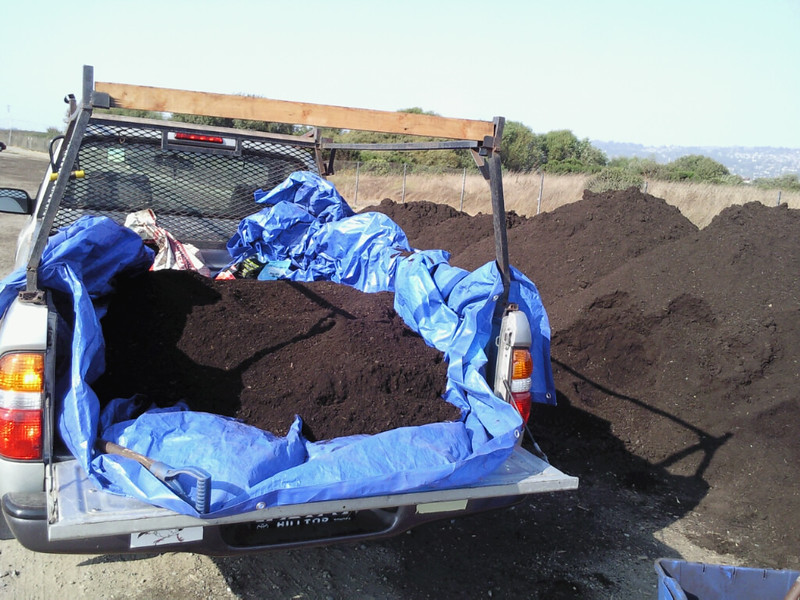
Shoveling Compost

Yesterday I went for a run at the Berkeley Marina when I was welcomed by tall mounds of pristine black gold.  Several times a year, city of Berkeley dumps municipal compost at the Berkeley Marina free for anyone to lug away. After trying to run a mile and half, I got excited and returned with my truck and a shovel.

The word "compost" shows up in many a bad shu review.  But after breathing in and tasting compost dust for an hour,  I'll never be so casual to overuse such hyperbole again. 

Ira has unexpectedly sent me a welcome box crammed with timely tea.  After a trying day, it warms my heart to see her handwriting. I know I've turned into a samples hoarder but winter is coming and I want to be ready.   I've thus far kept up my two month no-buy pact.  Tonight I brewed up perhaps one of the most expensive shu bricks to cross my path.  Although I am itching to use the C word on the latent wodui,  I've decided not to post anything further and let this sleep.  The shock is too much even for me.


Sunday, June 10, 2012

2006 Lucky 7581

I waited all Saturday for what hasn't happened since 2007- the arrival of a box chock full of pu-erh. My husband has mentioned that I am not a person who needs more tea, but I am not deterred by such logical statements of practicality.  Most readers of this blog probably have spouses or significant others who may have uttered such unheeded sentiments. Not everyone is lucky to have a wife like Hobbes who will fully indulge his mania even procuring boatload of beengs when traveling alone in China.

So let us see if my eight years of learning reflect any wisdom in my actions now or I am still that foolish seventy year-old man letting twenty something gold diggers take my heart and wallet again and again. You can decide for yourself which tired trout about Chinese belief in cycles versus the Western faith in linear progression applies here.

I actually woke up 6:30a.m. this morning trying to determine which of the shus to try first despite having bugged out my eyes until 1 a.m. trying to buy yet more tea.  Let us start with our first selection- the 2006 Lucky 7581 from Kunming Tea Factory composed of leaves from 1998.  According to the exuberant vendor, this "legendary" brick whose recipe represents the "crown jewel of pu-erh" is "one of the best shus" he has ever tasted.   I'm afraid I wasn't immune to such blatant overtures although I knew first hand such vendor descriptions can sometimes lead to a disappointing overpriced end.  I wanted to give this recommended U.S. vendor a try because in the end, vendors who press their own cakes and have somewhat reasonable prices on most things are a benefit overall to the tea drinking community here in the U.S.    But if this box ends badly, this may be the last time I bother ordering from any U.S. based vendor.  

Back to the 7581- by the virtue of having survived these last seven years in dusty warehouses, the vendor's stack of bricks have been uplifted to a more public internet existence than they could have possibly imagined while composting in giant heaps on the factory floor back in 1998.
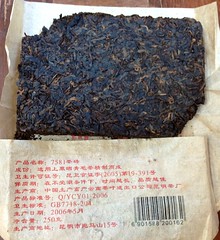
After 15 years of various middle-men exchanges, this particular brick and it's siblings have been given a new life in America by a certain "Uncle Jim".  This here brick on the right finally was adopted into a hedonistic pork loving Berkeley home.  (I definitely see some comic strip potential here... Second digression-before China became a leader in baby export, it was none other than South Korea who held this dubious ranking.) 

Despite all the hype and potential for fakes with 7581s,  I'll just take this tea for what it is and my first encounter is positive.   Initially I was struck by light delicacy of this tea somewhat similar to the Golden Needle White Lotus.  Even with the pot half full of leaves, this brick brews up thinner than expected.  It's the lingering aftertaste that I am always chasing and I have a faint but noticeable sweet tail of this tea on my tongue and finally a little tickle on the throat while I write this entry. The brews started with wood roast coffee notes- a strange match for such an airy brew, tending towards caramel throughout the 6+ infusions.  When sniffing the leaves between brews, burnt sugar scent is overwhelming and heady.  I would venture to say this appears to be the real thing or it's good enough that I am happy to be fooled so then it's down to the matter of the pricing.

According to a baidu blog,  the Kunming Factory supposedly produced 30 tons of this 7581(my math says 120,000 bricks) with 20 tons for export differentiated by a yellow wrapper while the white wrapper represents the domestic batch.  (All from google translator with search terms "昆明茶厂 7581 2006" ). Product \  It really is amazing to me that something originally so cheap and mass produced can turn out to taste this interesting. Despite marketing and production of "premium" bricks in the last few years, bricks tend to represent the low end of pressed tea market comprised mostly chopped up low grade leaves.  At a going price tag of $33 for 250g, this 7581 is a moderately expensive shu and I'm not rushing to snap up rest of the vendor's stock.   I already have a closet full of gratuitously smooth and pleasant ripe beengs from 2000-2006 and this brick tastes just different and complex enough that I'm satisfied.   A taobao check reveals the same thing is going for $8-10 if indeed they are the real thing.  Somehow I do not feel ripped off at all.  Ever since the 900% mark up on Verdant Tea, everything else looks reasonable in comparison.  I'll just call this the "Duckler Effect" from now on.

(July 11th update- I brewed this up a couple more times and I definitely would not buy this tea again or recommend it to anyone. It's too expensive for what it is.)

This not a tea I would normally subject to a bacon breakfast but I had brewed up half a gallon for kicks.  I enjoy myself enormously with buckwheat coconut flour pancakes, a fried egg laid yesterday from my favorite clucker Bonkers accompanied by generous pieces of bacon.  When I sip the rest of it cold, it's mostly a pleasant ride and only once I did get an unpleasant bitter hint in the aftertaste.  Otherwise, this 7581 is definitely a more interesting shu than my 2006 Menghai cakes proving again that aging does matter even in world of shus. But how much you are willing to pay for the privilege is up to your wallet and youth.  Seven years ago when I was glugging young sheng, paying top dollar for an aged shu seemed to me a waste of perfectly good money.  Even paying more than $25 for a ripe beeng seemed excessive back then.  Now I'm willing to settle and pay more for interesting shus even if they are an echo of the real thing - a true aged sheng.

Wednesday, June 06, 2012

Brick from Middle Earth - What would Frodo Drink?

I set myself to fold 4 loads of laundry tonight before my husband comes back from levitation class.  But you know who would rather be steeped in tea doings.  After MarshalN revealed that my 25yo mystery brick had been roasted multiple times,  the DIY in me wants to give it a go.  I realize the problem with experimenting with my current collection is that the price of failure is too high since I bought most of my stuff 6-7 years ago. Even the cheapest 2004 sheng brick which I bought for $2.50 is now mysteriously selling for $40.

No matter, I just need cheap raw material. I'm willing to spend 10 bucks on a science project.  I need some disposable shu bricks and to learn the secret to a good roast. I went to Oakland Chinatown and got a 3 dollar barnyard shu that I'm going to wetstore for a year and then roast.  Should roasting should be done in an oven, fry pan, or a popcorn popper which is the preferred home roaster for coffee hounds?  I'm going to try over the weekend pan roasting a little loose pu-erh and flaked brick samples to start.

In the meanwhile, I opened this brick up for a tasting. You could see from the neifei that this was the shu of choice for dwarves of Moria- what else would they drink after a hard day's work mining mithril?  When I take 4 brews of it, it's a muddy earthy pondy unpleasant shu - definitely meant for the orcs of Mordor- they probably put a lump of it in their leather water bag.

Let me entertain my hobbit loving friends and others on what teas Middle Earthlings would drink:
  • Smaug - no drinking, just hoarding all the vintage puerh of Middle Earth (Song Pin Hao, Tongchang Hao, Puqing Hao) which was simply in decrepit condition due to the dampness and awful dragon aroma
  • Gandalf - aged sheng from Smaug's lair after using his wizardry to remove mold and said offensive dragon aroma.
  • Bilbo Baggins -plain black tea before his "adventure".   After his return, keemun, yancha, and aged sheng which he split with Gandalf .  
  • Frodo - Golden Yunnan. Really prefers uncomplicated mellow brews after the whole ring incident. He really never could get into pu-erh so he gave Bilbo's stash of aged sheng away to Sam before leaving Middle Earth with the Elves. 
  • Hobbits - just plain black tea, don't go in for that foreigner brew.
  • Dwarves - Elder dwarves go for wet stored sheng, particularly pure Lao Banzhang which make beards grow woolier.  Younger elves go for the punchy new born sheng- all wild tree of course!
  • Aragorn - aged sheng only after reclaiming throne of Gondor. Just new Wild De Hong sheng during his days as a ranger.
  • Faramir- Aged sheng for special occasions after Gandalf introduces him to pu-erh. He's working off that tong of stone-pressed Yiwu young sheng that's a bit too fragrant for aging.
  • Elves of Rivendell - Oolong (floral Dong Dings of course!)
  • Elves of Lothlorien - Silver Needles
  • Saruman -  First generation De Hong Pao after he turned to the dark side. No need to ask. 
  • Riders of Rohan - Wet stored shu!  Barnyard earth flavors are prized by the Horse Lords of the Mark.
  • Ents - don't drink tea, kind of gross if you think about it...
  • Sauron - tough one...
(For those who are not Tolkien fans, this Middle Earth has nothing to do with the Middle Kingdom- 中国.)


Monday, June 04, 2012

Mystery Brick From The Past

The joy of being a packrat is that sometimes you refind a treasure you had completely forgotten about.  Once I found two crisp hundred dollar bills in my copy of the Wind in the Willows. I was happy for a few seconds, but then soon felt quite defeated knowing how many books I trade and donate. But this week, I was richly rewarded by my forgetful ways.

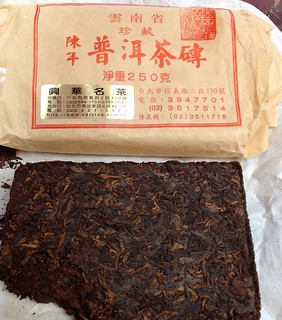
So let's continue on with this mystery from circa 2000. Even before I started drinking pu-erh, I used to order oolong from Taiwan.  In one shipment they had mysteriously included this brick for free.  It smelled so funky back then that I immediately wrapped it up in a brown paper bag but I couldn't force myself to throw it away.  I vaguely thought it was Tibetan tea and maybe I would be lucky enough to find yak butter someday to brew it up proper.  I wondered how the vendor thought this gnarly brick would fit into the delicate sensibilities of an oolong drinker but I am happy they did.  I stashed this brick away in various kitchen cabinets forgotten over a decade until this week. 

You can see the leaves are rough and twiggy and  that I had made serious inroads in drinking it last week.  There is a sticker on the wrapper which lists http://verytea.com.tw/ but I got this tea via a different vendor which I can no longer remember despite a diligent search. The wrapper definitely is new since it has verytea's phone number on it. I also tried taking the way back machine and looking through their website to even figure out if verytea ever sold this brick on their on-line catalog. No luck.  (This is an aside, but it's pretty fun to do time travel with the way back machine to check out pu-erh selections and prices from the past. I should do a post next week. But have a look at these sites that use static html-  tuochatea in 2005,  Holy Mountain in 2005.  Dang... I really missed some gems... )

Only in the very first brew I detected a subtle mold flavor which I recognize as wet storage, but it was not unpleasant.  Even with my summer allergies, I can tell there was something special going on. This twiggy brick had more layers of complexity, medicinal bark overtones, camphor than any other shu I've tasted which are from a narrow range of  Menghai, CNNP, Feng Qing, Haiwan, et al.  Unlike most of the shu's I tolerate, there really was a there there.  And it left a lovely sweetness on my tongue for an hour afterwards. I was so taken aback that this brick was so much better than I expected, I drank this tea four times during the weekend with different brew parameters to make sure.  You can brew it dark which brings out a roast coffee flavor.  Unfortunately this brick lasts only two steeps.

This tea must have been wet-stored even if briefly.  There were carbonized black hard leaves which Jason points out in his blog as evidence of wet-storage.  I did see a few white dots of mold just in one section.  What's making this tea so above my ho-hum shus?   The question begs to be asked, is it complexity from the wet storage or the decade in dry storage or both? I think the decade of dry storage definitely aired out that barnyard smell but the extra something special is definitely from the early wet storage because my 2001 FengQing does not have this special depth (for a shu).

But then I finally spend $15 to get the handwriting character plugin for Pleco on my ipad so I can figure out what the wrapper says. I spend a painful amount of time wiggling my fingers to draw the label text just get "Taipei City Rd."  But then the back wrapper says-  年份:十五年 (niánfèn- a particular year: 15 years). OMG, it was 15 years when it came to me (or maybe less if the vendor is not to be trusted.). It's now a 25 yr. old. OMG. It's not the most mind blowing tea but it was free and it sure beats all my other shu's hands down.


Wet storage on a shu seems kinda dangerous,  just a step away from compost.  I procured mostly high end Menghai shus and gong-ting tribute beengs but maybe I should have been slumming it with the cheap rough bricks with a Guangzhou past.   Now this gem has given a new path for my shu drinking.


Tuesday, May 22, 2012

2012 Menghai Golden Needle White Lotus

My mailman delivered a package from Kunming as  I was walking out of the door this morning so I took it happily to work. My setup at work is rudimentary, teapot and cup and I don't have luxury of controlled brewing, but it's enough for most teas.

I was a bit worried I might be disappointed by the hype but I can honestly say that the GNWL really is a lovely creamy soft tea, refined with a intriguing complexity(for a shu that is...)- kind of like the Audrey Hepburn of shus.  I brewed maybe 5 cups and the subtle camphor aftertaste carried all the way through lingering on my tongue pleasantly for an hour after my session. Most of my other Menghai shu blends(7452, 7572, 3rd grade, caravan to Tibet) are on the robust side so this is a welcome change. I was frankly in bit of a Menghai shu rut.

I also tried the 2009 Hai Lang Hao Jin Hao Gong Bing Ripe Pu-erh which was a tasty malty roasty cup with a cola licorice flavor. I know another blogger gave the 2005 and 2006 Hai Lang Hao "Jin Hai Lang" a dismissive "leather boot" rating so I was a bit worried but this 2009 Jin Hao Gong was a pleasant experience (or at least not an unpleasant experience).   Sadly it didn't last for more than 2 strong brews so I'm not as eager to get more.  I expect at least a good 5 cups out of my shu!

Sunday, May 20, 2012

Is a shu a shu a shu?

What is the aging potential in shu? I guess one definitely ages shu to get rid of that funky wodui smell.  Of course this doesn't stop vendors from adding the tag line "great for drinking now or put away for further aging". "Aging" promises further magical transformation and not the need for "airing out".  I have ripe pu-erh from 2002 and they do taste smoother and more mellow than younger versions of them selves.  I've read some opinions that even lighter fermented shus don't gain that much more depth in age.

Should one think twice when being asked to pay top dollar for an aged shu?   Most of my shu beengs date from 2001- 2006 when I hastily bought them in 2006 after being unable to drink young shengs without stomach trouble.  I did not love the taste of ripe shu as I did of sheng but I didn't want to stop drinking pu-erh so I forced myself to get a stack of premium ripe Menghai blends(7452,7572,3rd grade) and various obligatory Haiwan Lao tongzhis, as well as some CNNP.  But you can only drink so much shu so now I have a cache of older shu's(7-10yo) which really needs to be drunk. Shu's apparently can go stale and I guess it is true because my 2001 Feng Qing definitely was tastier 4 years ago then it is now. 

Is a shu a shu a shu? I admit there ares horrendous barnyard awful shus,  but is there such a thing as a great shu?  Is anyone really ever blown away by a shu? The word "amazing" or "mind-blowing" is not what you normally attach to a shu; shu is more like pumpkin pie.  I often read tea bloggers praising shu's with a "Pleasantly surprised" designation because the earthiness or pondiness is not as bad as they expected.  I think there are some pretty good shu's out there but the flavor variations tend to be small compared to the vast differences one can experience in sheng.  
Among my ripe cakes, probably the 2006 Menghai Yunnan to Tibet Horse Ripe Puerh Cake is the most interesting with lovely rootbeery/sarsparilla overtones but the other shu's I have had access to tend to have a rather limited palate ranging from roasty, earth, peat, woody, malty sweet to camphor/anise. I finally put in an order for the Menghai Golden Needle White Lotus which has had more gushing on-line than any other shu. If you think there is another mind-blowing shu's to be had, write me! I know I want to try some Boyou's but I don't know if ex-Menghai alum Mr. Huang is replicating the Menghai taste for a lower price or has he gone to innovate?  

Friday, May 18, 2012

Adding a bit of sheng in shu

My husband brewed me a sample of the 1999 Mangshi melon Phyll had sent as part of the Live Journal tasting so many years ago.  Ah, we were young then, hopeful too. 

Berkeley definitely is too dry as this 13 year-old tastes more like a 5 year old except not as punchy. Perhaps this sample is in that awkward stage where the taste is muted and not as interesting as it's young version but not quite there as an aged cake. I would love to see how my sample compares with samples aged elsewhere if indeed they had not been consumed. (Must track down Phyll and ask about it!)

After a hiatus of many years, I am carefully trying out my oldest shengs to see if my body can take it and see if any of my cakes are finally ready!  Ironically enough when I started drinking puerh, I was not interested in the taste of aged cakes- it was the dynamic forceful flavors of sheng I really loved so I did not bother chasing old cakes or shus.  Sadly my stomach is a bit ripped up even with the 13 year-old sample so I have no choice to brew up a big pot of shu.

My 2001 Feng Qing Ripe which I remembered being more lively back in 2007 now sadly tastes  a bit flat, or is it that my taste buds have been dulled over the years.   (I had forgotten that I had this cake as it stuffed was way back in the tea cabinet....)  Although cooked shu's do their job adequately, it's hard to find a reasonable shu which has satisfying complexity and aftertaste.  I added just a wee bit of the leftover Mang Shi sheng leaves to my shu tonight and to my delight found it added a spark.  I wish I had done this years ago as it really perks up the most boring of shus giving it a more interesting camphor dimension and a long lasting after taste- it's been an hour and I still have the sweetness on my tongue.